Allwinestories presents Lobna Liverneaux, artiste gastronome, private cheffe and Saké Sommelière.
We will embark on a captivating journey through the enchanting realm of haute French gastronomy, where each dish is perfectly paired with the exquisite artistry of sake.
Do you have food memories from your childhood?
I remember those summers in Tunisia, in our seaside villa with its patio entirely tiled in black and white. It was hot, and I would sit directly on the cool floor, savoring the rice pudding my mother had prepared. The comforting aroma of rice cooked in milk, delicately infused with orange blossom, filled the air. I loved the sweetness, the creamy texture of the rice grains, and the subtle freshness brought by the orange blossom. Children my age often came to visit, and my mother would offer them bowls of this rice pudding. These moments, filled with warmth and simplicity, remain etched in my memory like a true madeleine de Proust.
And when did you decide to become a chef?
When I was 10 years old, my mother took me once to the Austrian Embassy in Paris, where she was preparing a dinner for about twenty guests. I watched her work in a large professional kitchen, dressed in white and surrounded by her assistants. The atmosphere fascinated me: everything was orderly, impressive, almost magical. I tried to help as much as I could with my limited abilities as a little girl, amazed by the precision and passion she put into her preparations. I particularly remember an apfelstrudel she was making, and it was on that day that I had a revelation: one day, I wanted to do this job too. That unique experience marked the beginning of my calling as a chef.
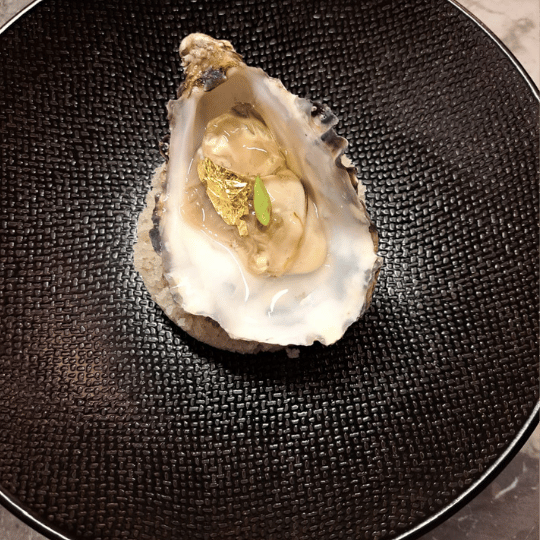
Oyster with elderberry jelly
Please describe to us your culinary background as well as you’re training in sake.
When it comes to cooking, I began by exploring my own ideas and techniques. However, I quickly realized that to truly progress, it was essential to learn from others. I took private lessons with chefs, and attended the Alexandre Dumas école hôtelière in Illkirch-Graffenstaden. To further enhance my skills, I completed certified training programs at both the Lenôtre School and the Ducasse School in Paris. These experiences have allowed me to broaden my expertise and refine my culinary artistry.
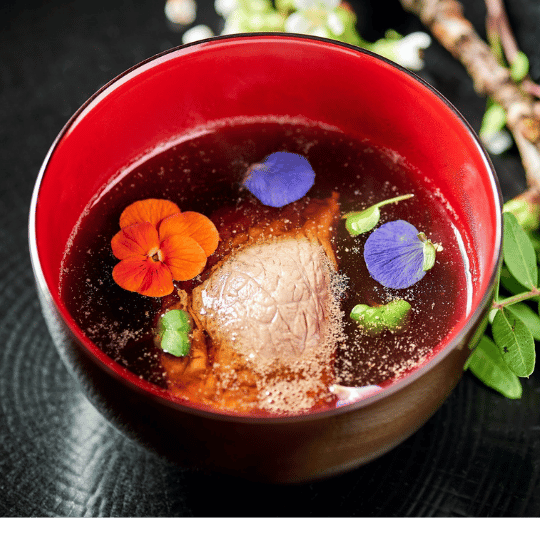
Sake beef ravioli
I discovered Japan several years ago, and that journey marked a turning point in my life. I fell in love with two treasures of Japanese culinary culture: sake and tofu. To deepen my knowledge, I trained with the Sake Sommelier Association (SSA), based in London, where I earned the title of sake sommelier, followed by that of sake pioneer, a certification that allows me to train both professionals and amateurs in sake tasting. I regularly attend sake-focused events and also serve as a jury member in international sake competitions, notably in Bordeaux and Luxembourg, as part of the SSA’s activities.
Furthermore, I have also refined my expertise in traditional Japanese tofu. I completed training in Yokohama and later in Paris, which earned me the title of Tofu Meister, awarded by the Japanese Tofu Association. These experiences have deepened my commitment to promoting and sharing the value of these unique specialties.
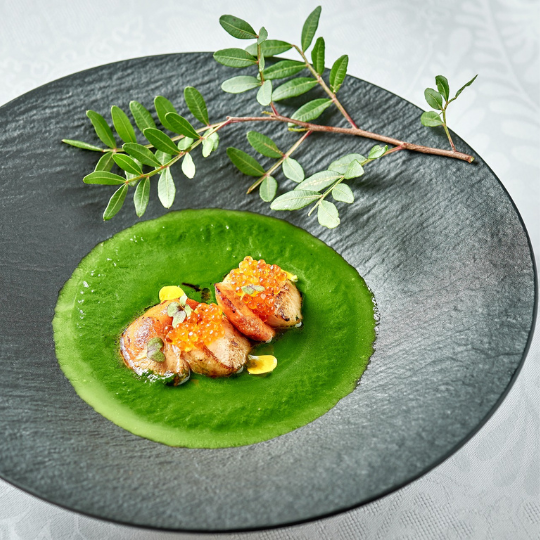
Scallops and spinach cream with sake
Let’s talk about your project “emotional cuisine”
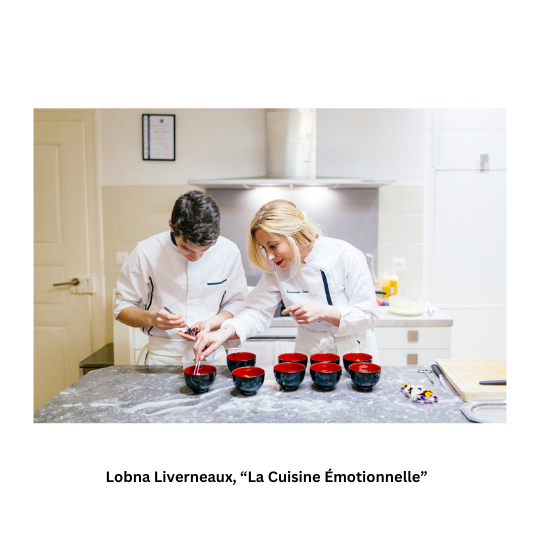
La Cuisine Émotionnelle : A Unique Gastronomic Experience
La cuisine émotionnelle is a gastronomic table d’hôte that blends culinary art with visual art, offering guests a convivial and immersive experience. This innovative concept creates a unique moment centered around gastronomy, enriched by an artistic exhibition.
Painters, photographers, sculptors, and even makeup artists showcase their work and take the time to explain their art to the guests during the aperitif. The number of participants is limited to 10 to ensure a warm atmosphere and optimal quality. I often draw inspiration from a displayed piece to create a dish, adding a creative and personalized touch to the meal.
Each dish on the menu is accompanied by a short poem, inspired by the tradition of haikus, which I compose specifically for the occasion. This poetic touch enhances the sensory and artistic experience, making it truly unforgettable.
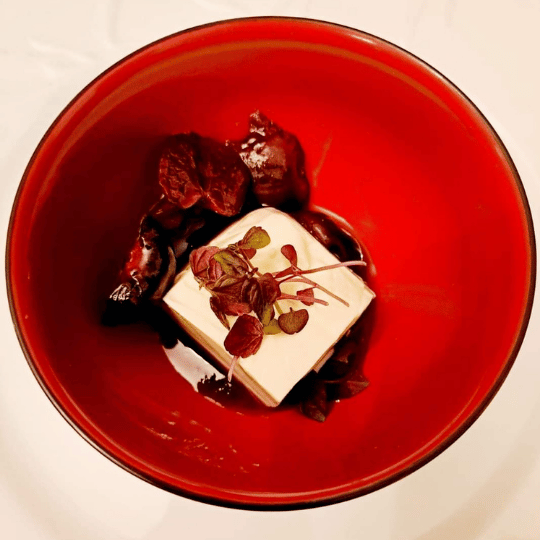
Silken tofu and cherry confit with mirin sauce
A Flexible and Customizable Concept
The core concept is based on a seven-course meal, each dish crafted with fresh, high-quality ingredients, carefully prepared by me. These creations are paired with wines or sake, ensuring a perfect harmony of flavors. I work alongside a kitchen assistant and a sommelier, who provide attentive and professional service.
Additionally, guests can participate in small-group cooking or pastry classes, where they can learn to create refined dishes in a warm and friendly atmosphere.
Themed Dinners à la Carte
Meals can be customized based on chosen themes, offering a wide range of culinary styles:
- Classic French cuisine
- Alsatian specialties
- Oriental cuisine
- Franco-Asian fusion food
- Vegetarian options
- Kaiseki Ryori, the pinnacle of Japanese haute cuisine
Cuisine émotionnelle is much more than a meal: it is a sensory and artistic journey, a celebration of flavors, textures, and emotions.
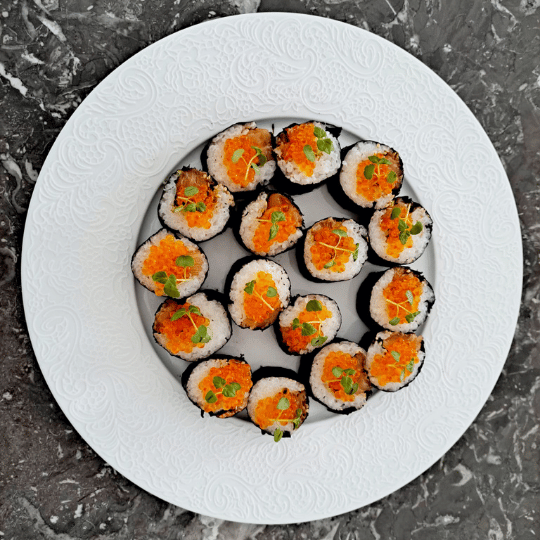
Sushi maki with salmon
How easy of difficult is to pair Sake with Alsatian Cuisine.
I wrote a book titled "Tendance Saké" (published by Éditions du Signe), which explores the many possible pairings between sake and French cuisine, with a particular focus on Alsatian gastronomy, though not exclusively.
Sake as an Ingredient
I have successfully incorporated sake into several recipes. For example:
- In a fish choucroute, it harmoniously replaces white wine during cooking, adding a unique subtlety.
- For foie gras, sake, with its finesse and complexity, proves to be an excellent alternative to gewurztraminer, port, or cognac, bringing a delicately fragrant touch.
- In pastry, sake is equally versatile. For instance, it can replace kirsch in a black forest cake. In a clafoutis, the use of umeshu (plum sake) imparts an original and refreshing flavor.
Sake as a Pairing
When it comes to sake and food pairings, the possibilities are equally remarkable:
- With a tarte flambée, sake can replace beer, adding a new dimension to the dish.
- It is also one of the few alcoholic beverages that can enhance delicate dishes like a velouté or a chef’s egg creation.
- Sparkling sake pleasantly surprises when served as an alternative to champagne, either as an aperitif or paired with a light dessert.
- Seafood, especially oysters, finds an ideal partner in sake, thanks to its ability to elevate their natural freshness and salinity.
Sake is an incredibly versatile ingredient and pairing, capable of enhancing traditional dishes while surprising with its modern and innovative combinations.
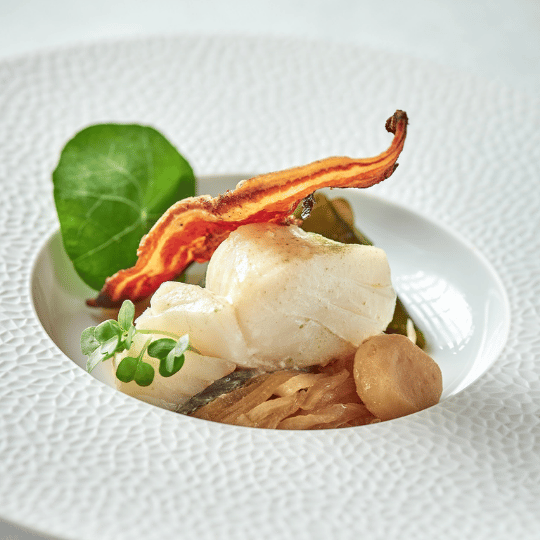
Daikon sauerkraut with sake
How do you balance tradition with innovation in your dishes?
My cuisine is primarily traditional French, with the exception of when I prepare kaiseki, a meal inspired by Japanese haute gastronomy. However, I enjoy revisiting these classics by incorporating Japanese or Oriental ingredients, adding a touch of originality and fusion.
For example, I offer a fish choucroute where the cabbage is subtly replaced with daikon, a Japanese radish. I’ve also created a dessert called “Aziadé,” in homage to Pierre Loti, made with pistachios from Sicily or Iran, combining elegance and exoticism. Conversely, I reinterpret Japanese preparations, such as daifuku mochi, a soft ball of glutinous rice dough, which I fill with foie gras instead of the traditional red bean paste (azuki).
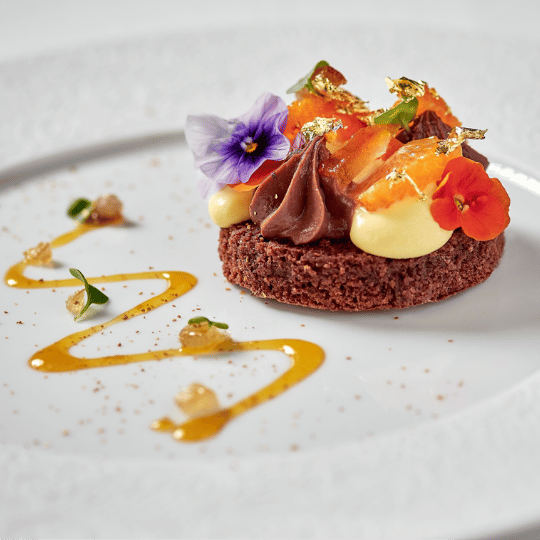
Mandarin and chocolate cake with sake
I’ve also developed a soy cream Chantilly, which I use to garnish veloutés and other culinary creations. As for tofu, it takes a prominent place in my kitchen in all its forms: fried, soft, firm, as meatballs, and accompanied by sauces that are sometimes sweet, sometimes savory, to suit all tastes.
Finally, on a visual level, I sometimes draw inspiration from the works of painters or photographers to create plates that are as beautiful as they are appetizing, because for me, the pleasure of the eyes is inseparable from that of the palate.
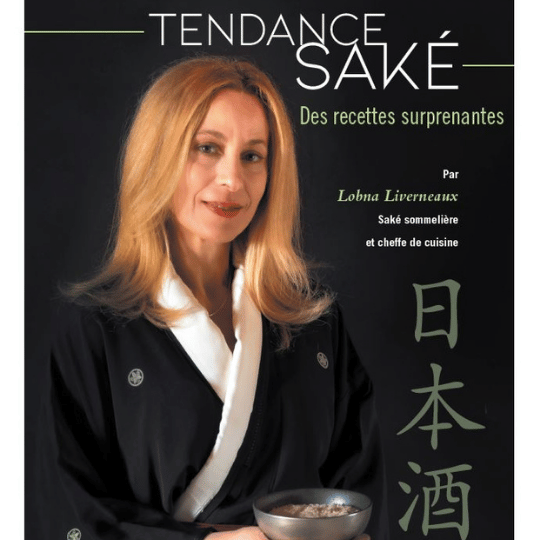
My culinary journey reflects a harmonious balance between tradition and innovation, where classic French gastronomy blends with Japanese and Oriental influences to create unique experiences. Through my creations, training, and passion for sake, I strive to offer more than just a meal: a true sensory and artistic immersion, where every dish tells a story.
Marinos Skolarikos, editor 8 December 2024
Photo Credit: Lobna Liverneaux, Frantisek Zvardon, Ignacio Haaser