We are delighted to share a series of texts from the remarkable book by George Venetsanos, founder of the Venetsanos Winery, Traditional Winemaking in Santorini. Together, we explore the architectural heritage of the wineries of Thira, uncovering the rich history and traditions behind Santorini’s winemaking culture.
The Santorini Canava
The canava, known in ancient times as the oineon, leneon, or pithion, is more than just a wine cellar—it is a traditional artisanal winery where grapes are pressed, musts ferment, and wine is crafted. From antiquity to the present day, a grape grower who owns a canava is also, in a broad sense, a winemaker, possessing both the tools and the knowledge needed to produce wine.
A canava is typically composed of a main area, where barrels of various sizes (including traditional wooden casks and larger vessels such as boots) are stored, and a cloister, which extends deep into the structure and houses the wine presses. The afoures—large fermentation vats—are carved into the rock, arranged side by side along the length of the canava. In wider caves, two rows of afoures are hewn, while in narrower spaces, a single row is used, supplemented by additional barrels where possible.
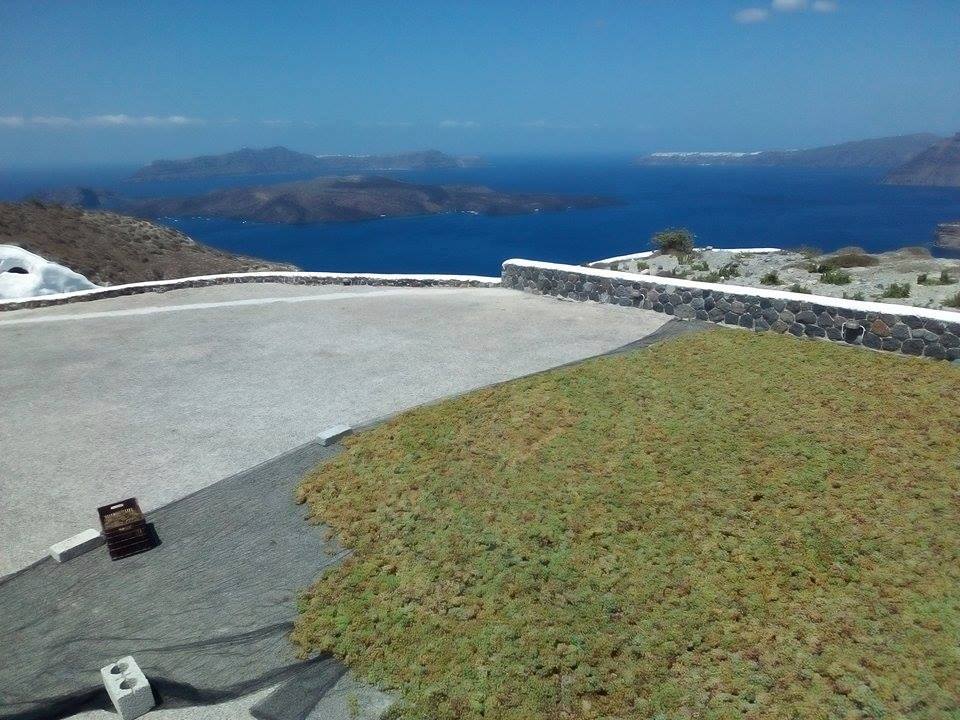
Adjacent to the canava is the rakizio, the small distillery where tsikoudia or raki—Santorini’s traditional pomace brandy—is produced. A terrace is often left beside the canava for growing household vegetables such as onions and potatoes. However, during the harvest season, this area is cleared to become a sun-drying space where grapes are laid out to bask in the island’s intense sunlight. It is from these sun-dried grapes that Santorini’s famous Vinsanto, the renowned sweet wine, is made.
Venetsanos Winery Santorini
For winemakers whose canavas are located far from their permanent residences, a small living space is typically included, often with a rudimentary kitchen. Some canavas instead feature a parastia, an outdoor hearth in the courtyard, where meals are prepared. During harvest time, workers frequently stay overnight, as winemaking requires continuous attention, often extending into the night.
The Tradition of Nykteria and the Pressing of Grapes
Nykteria—or night work—is a common practice during the vendema (grape harvest), ensuring that grapes are pressed as quickly as possible after picking. Night shifts are also crucial during tsikoudia production, as the government-issued distillation license, granted by the State General Chemistry Department via the Tax Office, is valid for only two days. Every moment counts. Some winemakers even establish their permanent residence near the distillery to oversee the entire process without interruption.
The Vital Role of Water in the Canava
Every canava requires a reliable water supply, as water is essential for various tasks, particularly cleaning barrels and distilling tsikoudia. In the past, before boreholes were introduced, Santorini’s groundwater was brackish and unfit for use. As a result, rainwater collection was the primary water source. Two cisterns were typically built—one collecting runoff from the courtyard and possibly the street, and a smaller one gathering water from the roof. The first was used for general tasks, while the latter provided drinking water.
Santorini benefits from boreholes in the island’s eastern and southern regions, rainwater tanks, and the distribution of over 4.5 million bottles of water annually, ensuring that both residents and visitors have access to clean water.
Photo Credit: Venetsanos Winery Santorini