A new book dives into the extraordinary collection of “antiquarian” wine and gastronomy artefacts belonging to Bordeaux estate Château Haut-Brion. Among the rarely seen items are a dinner menu from Louis XIV’s Versailles court, and a handwritten note about wine by Pablo Picasso.
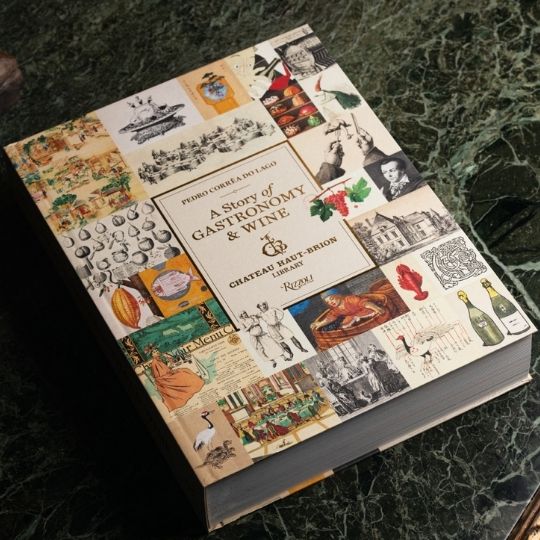
New York publishing house Rizzoli New York has published a hard-backed tome that looks behind the curtain at First Growth estate Château Haut-Brion’s rarely seen private library.
Founded in 1525 by Jean de Pontac, the wine estate has born witness to countless key historical moments in the epicurean fields of wine and gastronomy. And while fine wine enthusiasts are likely familiar with Haut-Brion’s wines, far fewer know that the château has been quietly amassing artworks, original letters, manuscripts and engravings related to wine and food for centuries.
Among the library’s treasures are more than 7,000 rare volumes of books, including a 6th-century Egyptian papyrus, a letter thought to be written by a friend of French martyr Joan of Arc, and a series of 17th century Japanese scrolls depicting ceremonial banquets.
Not only this, but a handwritten note on wine by Cubist artist Pablo Picasso can be viewed in the new book entitled ‘A story of gastronomy & wine, Chateau Haut-Brion Library’ (US$85).
Time capsule to the on-trade
The wine estate’s private library also serves as a time-capsule to the on-trade, with 471 historic menus, and around 100 “legendary restaurant wine lists” telling the story of how the hospitality industry has evolved, along with the role that wine plays within it. There is a menu from Louis XIV’s Versailles court, along with detailed guides to some of the earliest Parisian restaurants available to peruse.
Furthermore, one of the co-authors of the book is himself wine royalty. HRH Prince Robert of Luxembourg, who is chairman and CEO of Domaine Clarence Dillon, which owns a portfolio of French wine estates including Château Haut-Brion, penned the book alongside Brazilian art historian Pedro Corrêa do Lago.
According to the authors, readers are offered “a vivid exploration of centuries of global food and wine culture” via themed chapters such as: ‘At the Table of Kings’; ‘The Birth of the Restaurant’, and ‘Diplomacy and Gastronomy.’ They describe it as “an essential read for wine enthusiasts, historians and art lovers drawn to the enduring allure of gastronomy”.

Drunken Monkey hypothesis
A forward to the book written by Prince Robert of Luxembourg reads: “If you, like me, subscribe to the Drunken Monkey Hypothesis proposed by biologist Robert Dudley, you will accept that food and wine have been inextricably linked long before we had words to describe them… this ritual communion has evolved with us over the millennia. From the forest floor to the fine linen of the dining table, the setting has changed but the instinct remains the same. The sensual pleasures that bring us together to break bread and share a glass are not born of mere social niceties; they are deeply rooted in our very need and desire for connection.”
The book’s deep-dive into this “unique cultural legacy” precedes a landmark Sotheby’s auction of ex-cellar wines from Château Haut-Brion due to take place on 1 October. The sale of more than 675 lots will include First Growth barrels along with 90 years-worth of rare vintages. Serena Sutcliffe MW, the honorary chairman of Sotheby’s Wine has called it “paradise found” for fans of both Haut-Brion and Haut-Brion Blanc, and pointed to the “impeccable château provenance”.
Read tasting notes for Chateau Haut Brion’s wines from the 2025 en primeur campaign, written by db Bordeaux correspondent Colin Hay, here.
The Darinks Business
by Sarah Neish