In late August 2026, I participated as a judge at the world’s only competition dedicated to wines from heroic viticulture, the Mondial des Vins Extremes 2026.
Together with my fellow judges, we visited the Azienda Agricola Pianta Grossa di Luciano Zoppo winery in the Aosta Valley, in the village of Donnas. We toured the vineyards, where the vines are cultivated on an area of approximately four hectares using the Pergola Valdostana training system. The vineyards are located on steep terraces. The soil is sandy and rich in organic matter. The sand imparts finesse and aroma to the wine, while the organic matter ensures adequate soil moisture content and the essential nutrients for balanced organic cultivation: essential conditions for producing healthy and well-ripened grapes. The organic matter is sourced on-site from the grass clippings that grow beneath the trellises; once left on the ground as mulch, it protects the soil from the winter cold.
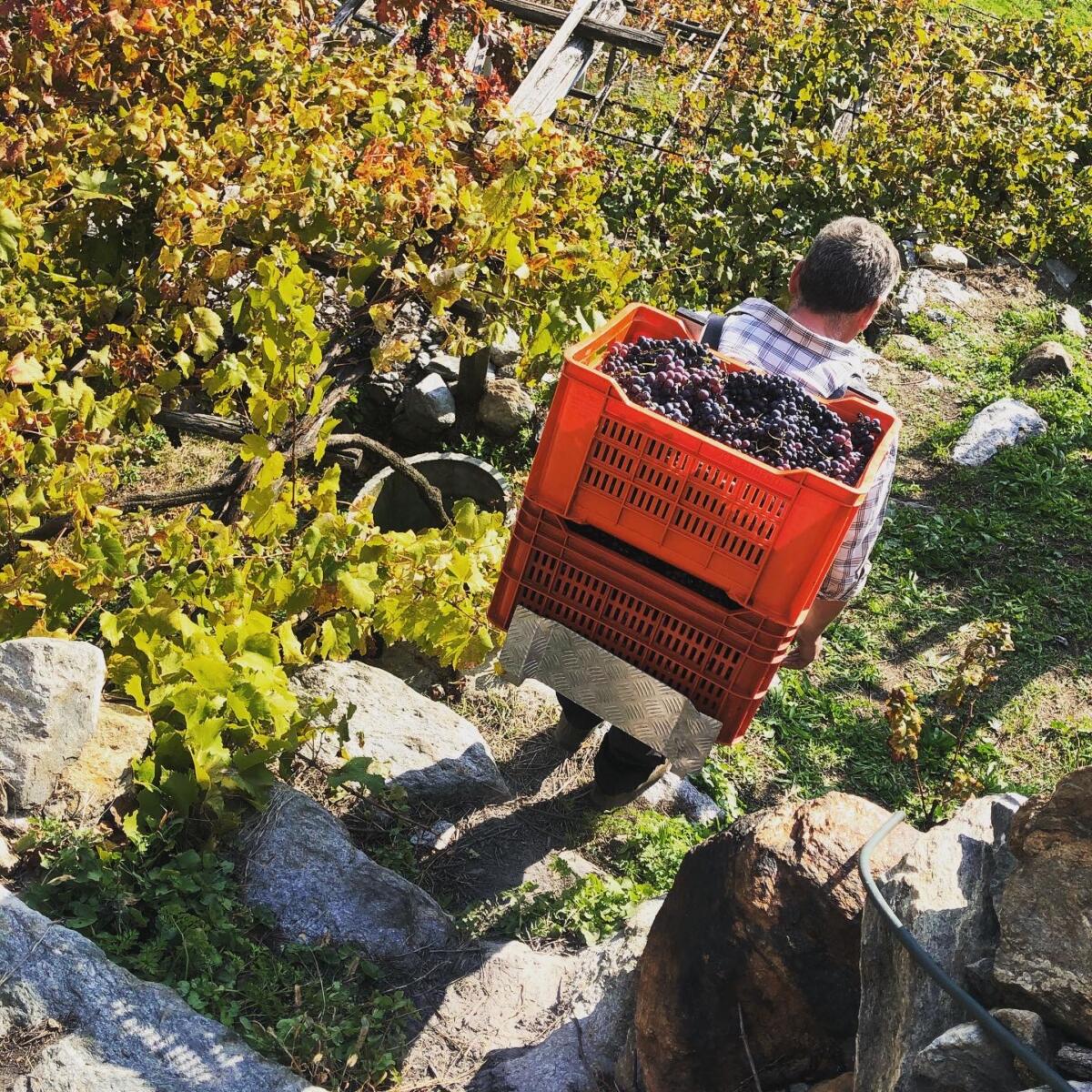
Thanks to natural soil management practices, the winery has never had to resort to the use of herbicides or irrigation. Pest control measures are carried out in accordance with European guidelines for Integrated Pest Management (IPM).
The wines of the Pianta Grossa winery are based on the red Nebbiolo Picotendrro and Fumin varieties, aged for 12 or 24 months in barrels.
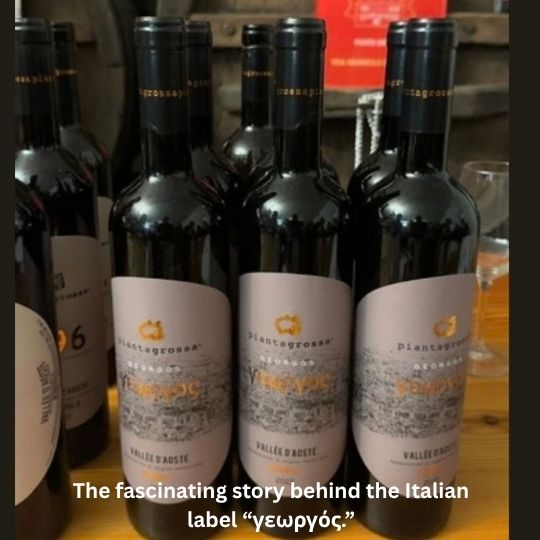
The wine that piqued my curiosity was the “Georgos.” I asked the winemaker why he named it that. His answer was disarming: “To honor a Greek winegrower named Giorgos who sold me this wonderful vineyard where we grow the grapes for this wine.” And he continued. On the label, I’ve included the name in Greek, and I hope to eventually export it to Greece as an alternative to Nebbiolo.
Wine characteristics:
Name / Classification: Valle d’Aosta DOC Donnas
Production Area: South-facing vineyards in the municipalities of Pont-Saint-Martin and Donnas, at an elevation of 400–500 meters above sea level.
Soil: Morainic, sandy, steeply sloped, terraced.
Grape Varieties: 100% Nebbiolo Picotendro.
Number of vines per hectare: 3,000–3,500.
Training system: Aosta Valley Pergola (Pergola Valdostana).
Yield per hectare: 5,000 kg.
Alcohol content: 13.5%.
Total acidity: 6–6.50%.
Harvest: Third decade of October.
Vinification and aging: Fermented in stainless steel tanks at 22°C, with maceration for approximately 90 days. Aged for 24 months in Stockinger Austrian oak barrels and aged for 6 months in the bottle.
Appearance: A soft ruby red color with garnet highlights; dense.
Nose: Intense and persistent, with aromas of small red fruits, eucalyptus, and licorice.
Palate: Smooth and briny (mineral), with pleasant fruity notes and hints of spices and licorice.
Serving temperature: 17/18 °C.
Food pairing: Lamb chops with aromatic herbs.
Author: Marinos Skolarikos.
October 6, 2026
Photo Credit: Allwinestories
Translated with DeepL.com (free version)