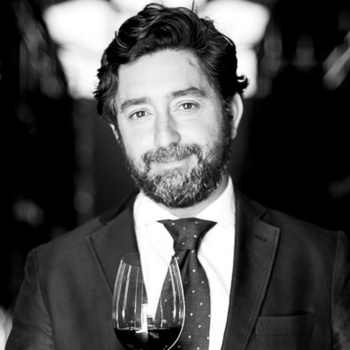
Today in “allwinestories on air” we are hosting Mr. Gonzalo Iturriaga de Juan, the technical manager of the emblematic “Tempos Vega Sicilia”.
We at allwinestories.com are dedicated wine lovers. Well, please let me start by asking you to describe me the history as well as the philosophy of your winery.
Initially, considering the history we have to go back in 1864 to Don Eloy Lecanda y Chaves, the first owner of the winery. He planted the first vines in the appropriate places of our limestone soil and moreover he planted varieties especially from Bordeaux such as Cabernet Sauvignon, Merlot as well as Malbec and Tinto Fino the local name of Tempranillo grape. Then the Antonio Herrero Vazquez family took over the winery· the most important thing they did was to start working with Cosme Palacio, the winemaker from Rioja. Next was Hans Neumann and the final step at 1982 was the Alvarez Family. Today Pablo Alvarez CEO continues the tradition of iconic Tempos Vega Sicilia. He bought the winery knowing little about the production of wine, but was very passionate and in 1991 they founded the Alion, another winery located in Leon.
Alvarez family wanted to create a more cosmopolitan wine and they succeeded in it. In 1993, just 3 years after the fall of Communism, the Alvarez Family turned its sights to Hungary and founded Tokaj-Oremus Viedos y Bodegas. Then we invested in Toro wine region and in 2001, founded Pintia winery. Our last project was Macan in 2013 with Benjamin de Rothschild. We decided to create something together. The unionof two leading name of the world of wine is based in La Rioja wine region. We started tasting wine secretly and now we have a year that we have started producing wine. In 2016 we improved our facilities and this is going extremely well.
In all our projects Vega Sicilia, Pintia, Alion, Macan and Oremus, our philosophy is the same. We work with the same respect in the production of all our wines following a quite ecological method, a principal factor for our heritage. Also essential is the choice of the locations of our wineries. All new plantations are turned to these choices. Whenever we start a project, we need time to reach the style of wine we want. When we get there, we keep evolving but keeping the same style of wine.
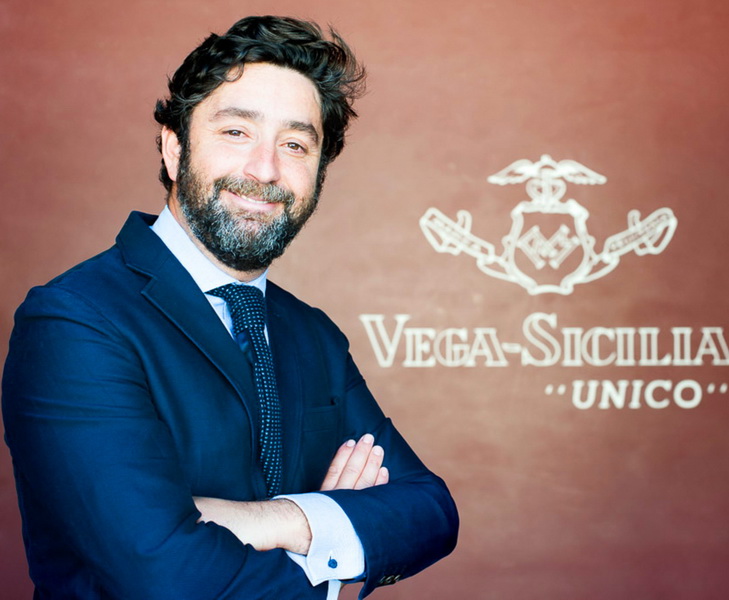
We would like to know a few things about your personal history in relation to winemaking.
Well, I took my first steps in the winery by chance. I was in Spain, in Madrid, not knowing what to do in my life, so I went to Herederos del Marques de Riscal for three months’ summer work. I really liked it and asked the director how could I improve my knowledge. So he helped me go to France, to the University of Montpellier, as he believed that it is important to produce wine in a country of wine culture. So, I went there and after my 2 years experience in France, I went to Bodegas Habla in the southwest of Spain. This was a completely different project, being responsible for more people, facing new challenges. Six years later, when the financial crisis hit in 2008, everything changed and I took on something different. I was in charge of a French biotechnology company in America and I really enjoyed travelling, moving from one place to another and visiting various wineries. But in 2015 Pablo Alvarez, the owner of Vega Sicilia, invited me to work with him. For me and for all Spanish winemakers, Vega Sicilia is a dream, so I could not refuse this great offer.
What are the milestones in your career?
I was just a lucky person in my career. I was in the right place at the right time. When I went to Riscal in 2002 the director guided me to go to Montpellier and it was crucial for my career. The opportunity of having my first job in a small winery, where I worked for two years with a great consultant from Bordeaux from whom I took my first lessons. Habla was also a very important step with Xavier Ausas, ex technical director, from whom I learned a lot. And now I work with two wonderful consultants, one from Bordeaux and Kyriakos Kinigopoulos -also winemaker- based in Burgundy who specializes in Mandolas.
I have personally tasted several wines from your production. They are fine wines, but what impressed me most is the Tokaj Oremus Mandolas. Will you be able to share with us some of your secrets about this wine?
Oremus Mandolas was made under the instructions of the Technical Director Basco Andras in Hungary since 2000. He has been travelling a lot since the communist era. He had a special passport that allowed him to travel from one continent to another. In 2000 he started producing white wines. In 2004 he decided to produce white dry wine as he wanted to produce excellent wine with huge potential. In 2015 we wanted to give a boost to this project and we started working with the Greek oenologist and consultant Kyriakos Kinigopoulos. He helped us improve the quality of wine and we are now more precise in what material we use to produce fine wines. Mandolas is one of the Oremus vineyards and it is only planted with Furmint, the noble variety of the region. We are produced in volcanic soils and you have to harvest them at the right time, because if it is done much later you lose the freshness, while if it is done too early it will be very crunchy, so it needs to be done at the right time. Then the fermentation takes place in new barrels and takes 8-12 days. The wine is aged in 136lt small barrels.