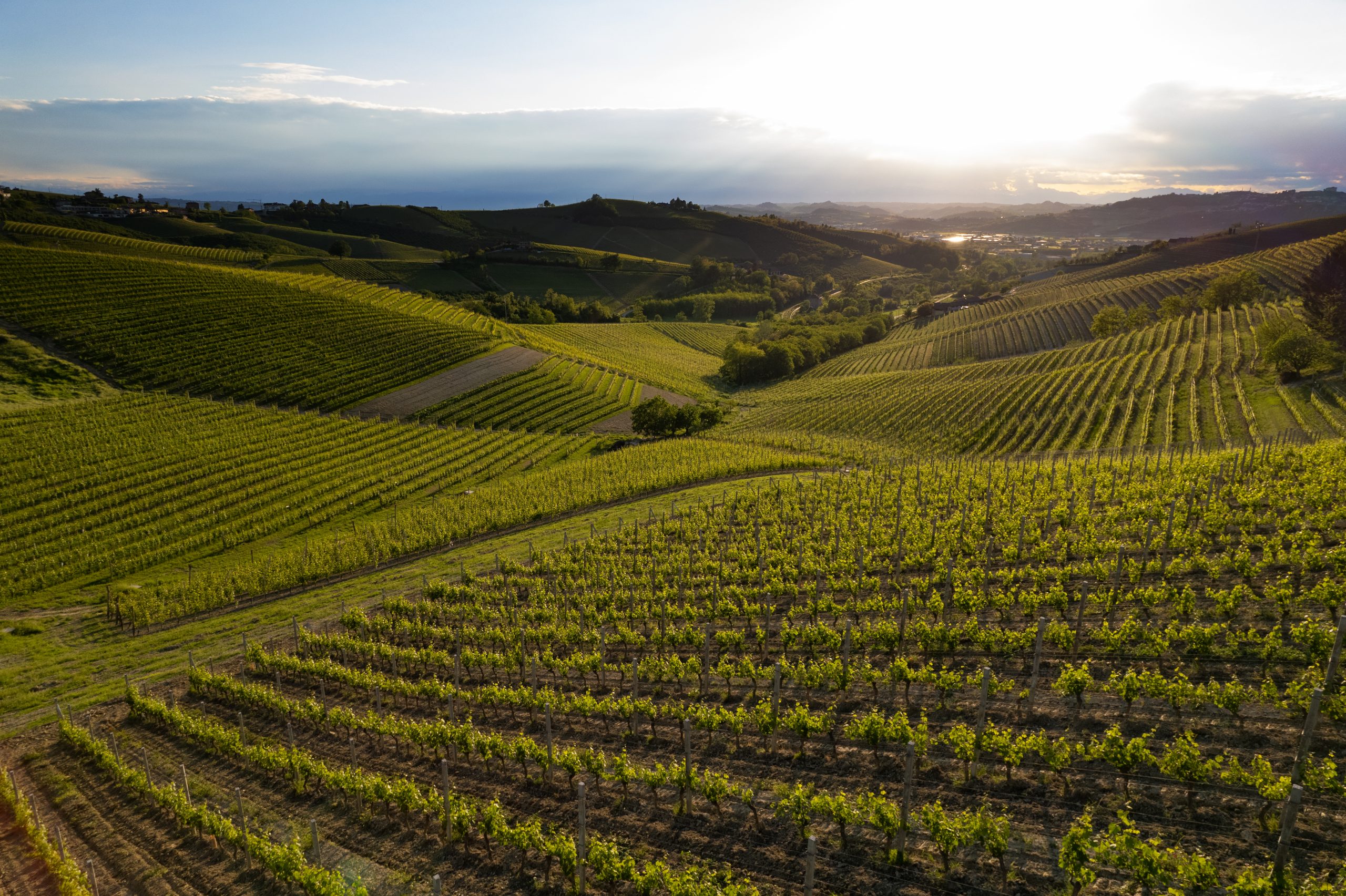
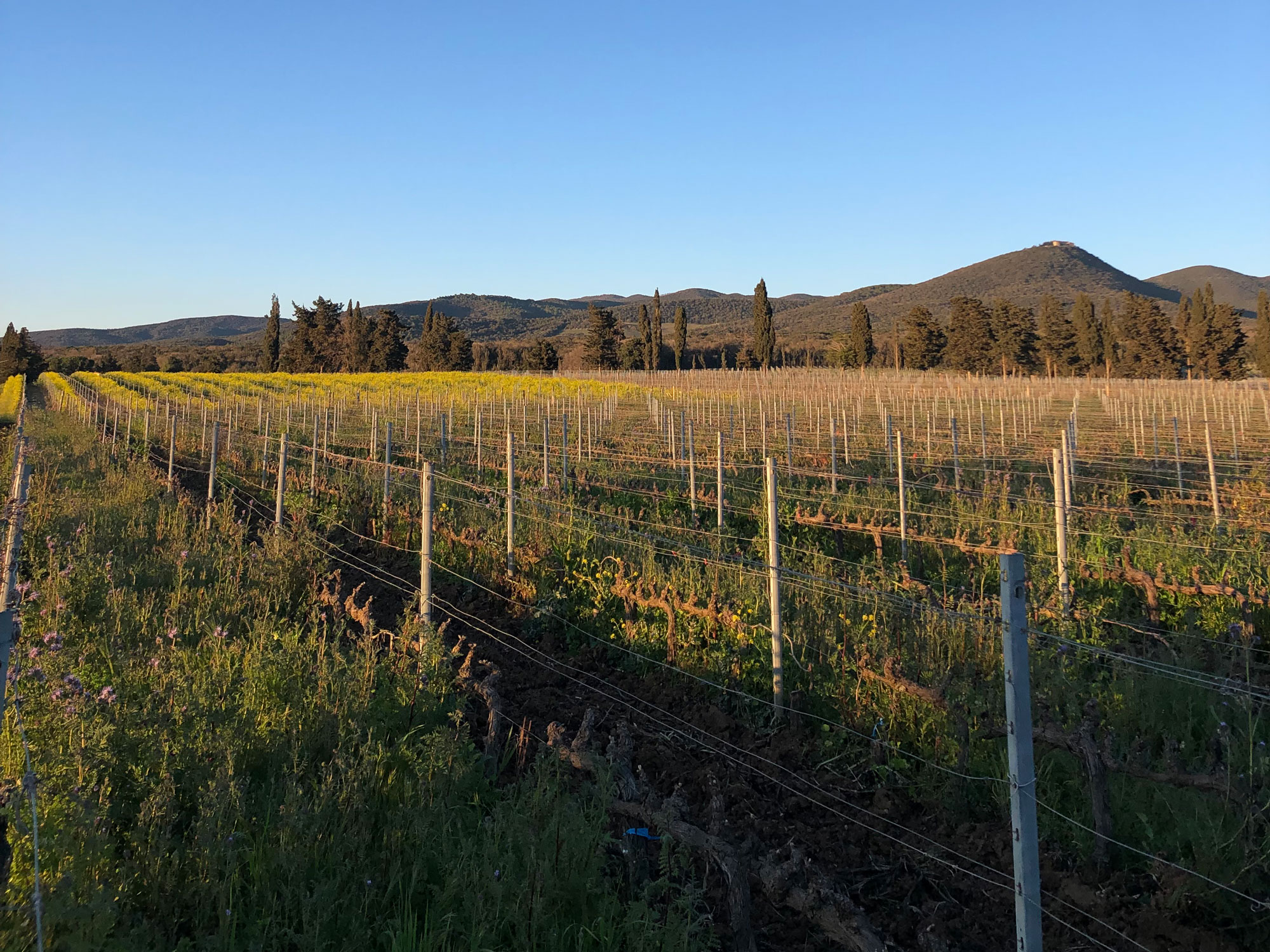
Spring in the Bolgheri vineyards
The 2023 vintage has been showing common characteristics throughout all of our wine-growing areas in both Piedmont and Tuscany: initial growth production was abundant, then we experienced losses due to downy mildew and sunburn. We had a late harvest everywhere, and was completed without rush since we had summer-like days throughout October. Climactic conditions allowed us to leave the grapes on the vines until complete phenolic maturation. Fermentation was normal and quick for all varieties due to the lower presence of potassium and of higher nitrogen. The alcohol levels are low and the acidity is high, the ripe and thick skins require longer maceration times and promise good final complexity in the wines.
A first look at this year’s vintage in Bolgheri
2023 is an outstanding vintage for Bolgheri with a very high quality average. We are also satisfied with the final production, 15% more abundant than in 2022, not because of a higher grape bunch per plant but due to larger grape bunch sizes. It’s not a vintage in the opulent classic style of Bolgheri, but it very much reflects our taste and style. The wines have a marked elegance and a positive, higher than expected acidity. The aromas are floral rather than fruity or spicy and there is excellent structure, low alcohol and sweet tannins, all of which maintain a very elegant profile of the wines. The frequent rains required a lot of work in the vineyards to protect the vines from fungal diseases but the results were excellent. The rains also caused a delay in ripening, but good weather in September and the late harvest brought each variety to a slow and excellent maturation.
Seasonal Trend
The winter, mild and rainy from October to January, favored good soil vigor and softness. From mid-January to mid-February the temperatures dropped, reaching night lows of 2°C below zero, useful for slowing down both the grassing and the re-awakening of the vines. In March the temperatures rose back to the seasonal averages (lows of 6-7°C and highs of 22-23°C) and in the first ten days of April budding began, very homogeneous across all varieties, with the development of good quantities of grape bunches.
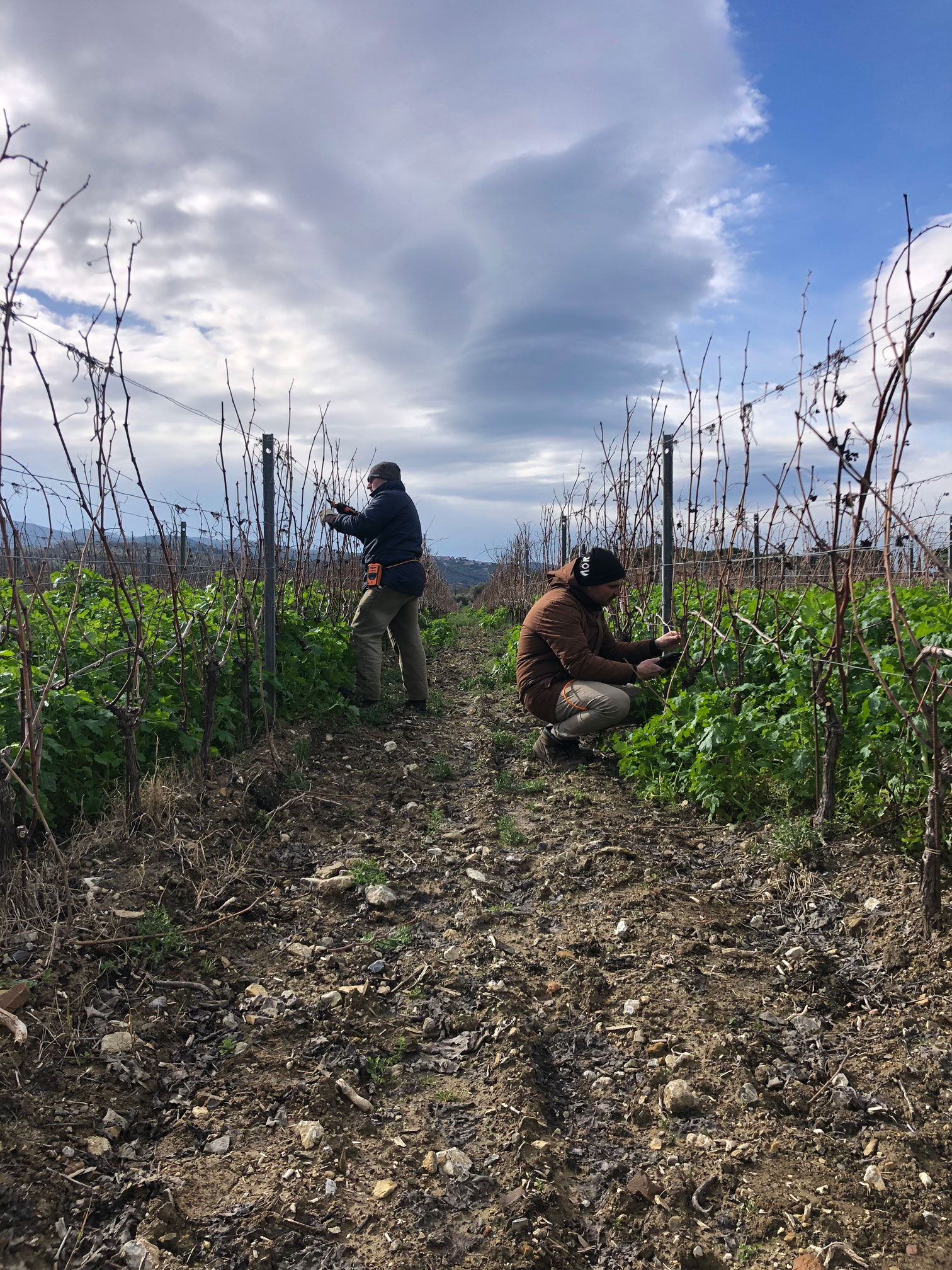
Left: Winter pruning
Right: Mowing broad bean cover crop for green manuring
May 2nd it began raining with incredible diligence for 34 out of 40 days between May and June. The constantly moist soil and vine leaves were an ideal environment for the development of downy mildew, and managing the fungus was very difficult. Timeliness and team availability to operate at any given time and day was crucial. Despite the pressure of fungal diseases, we have not suffered any production losses, except for some leaf damage in the vineyards closest to the forest or in the lower valleys.
Yet thanks to the rains, the vines did not suffer any water stress and the canopies remained lush and green throughout the season.
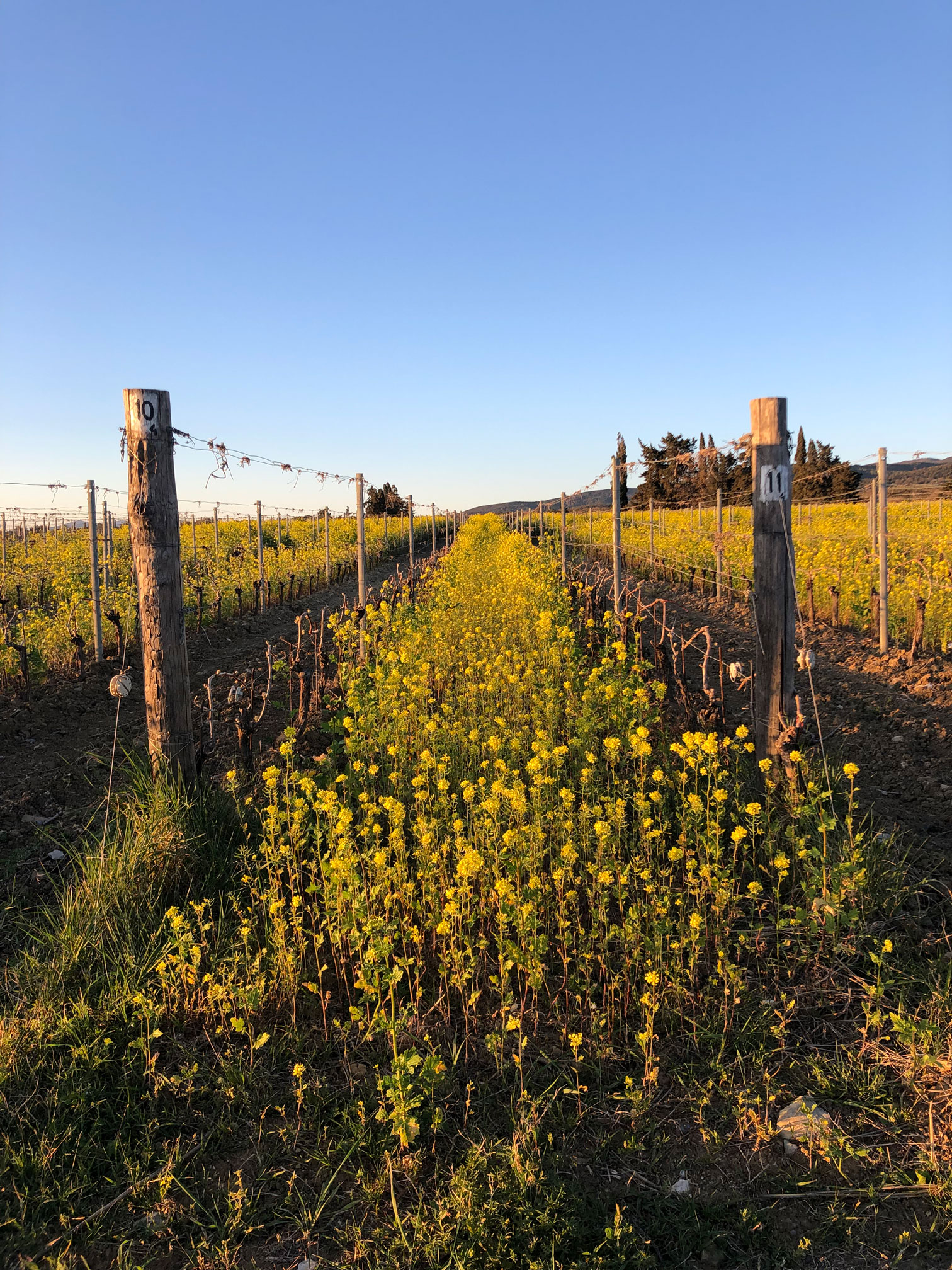
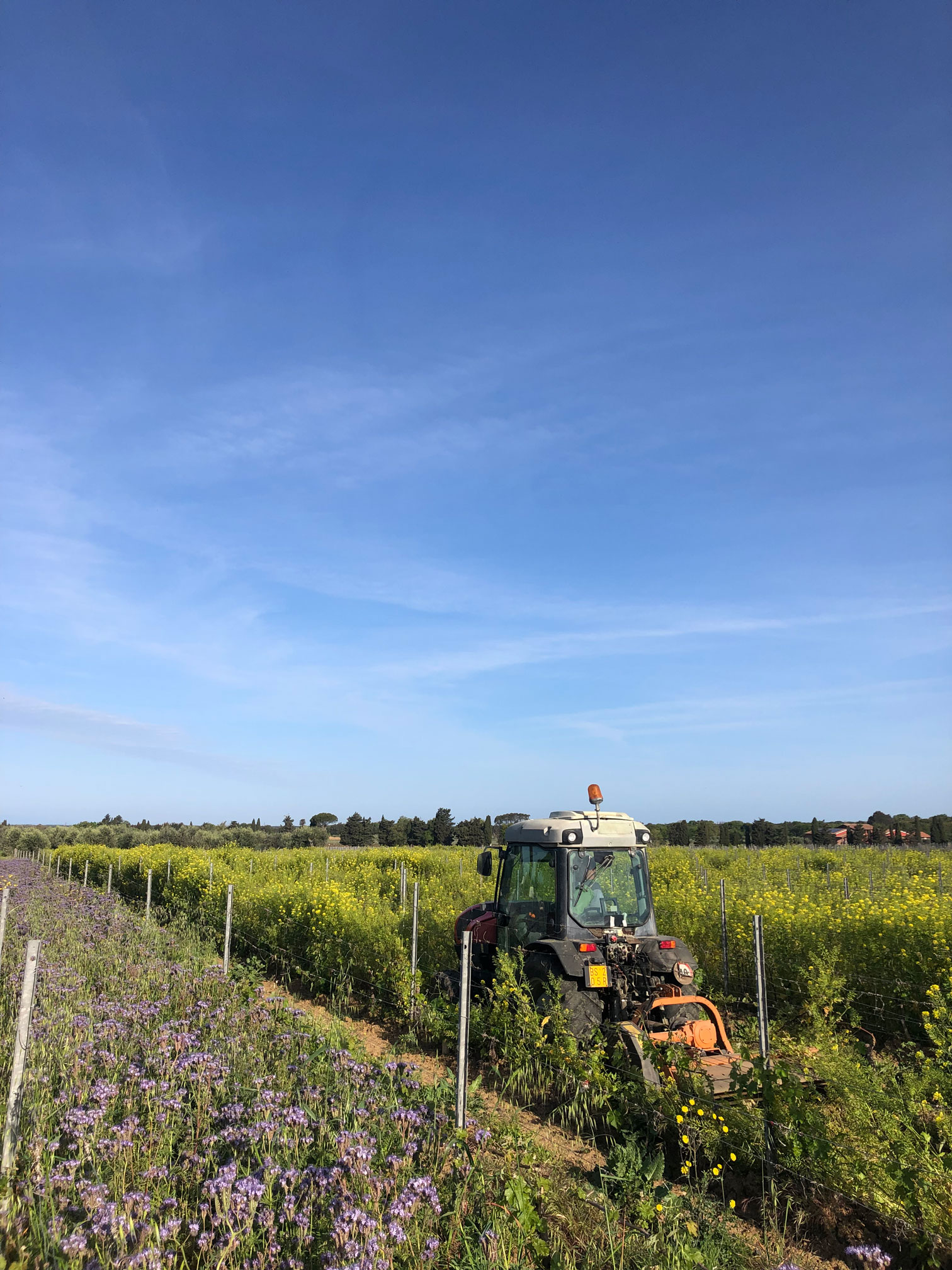
Left: Cover crop between the rows
Right: Mowing the mustard flowers for green manuring
July was dry and hot, August began with average temperatures with good diurnal ranges between day and night. Four extremely hot days at mid-month, with temperatures reaching 42°C degrees, inevitably caused sunburn on the exposed grapes that weren’t protected by the leaves. The damage was minimal and was removed by cleaning the grape bunches. Luckily, the heat ended with a storm that dropped 90 mm of water drastically lowering the temperatures to 22°C.
September was hot, with significant diurnal variations from 13°C at night to 27°C during the day. The sun continued to be very strong and temperatures remained high throughout the month.
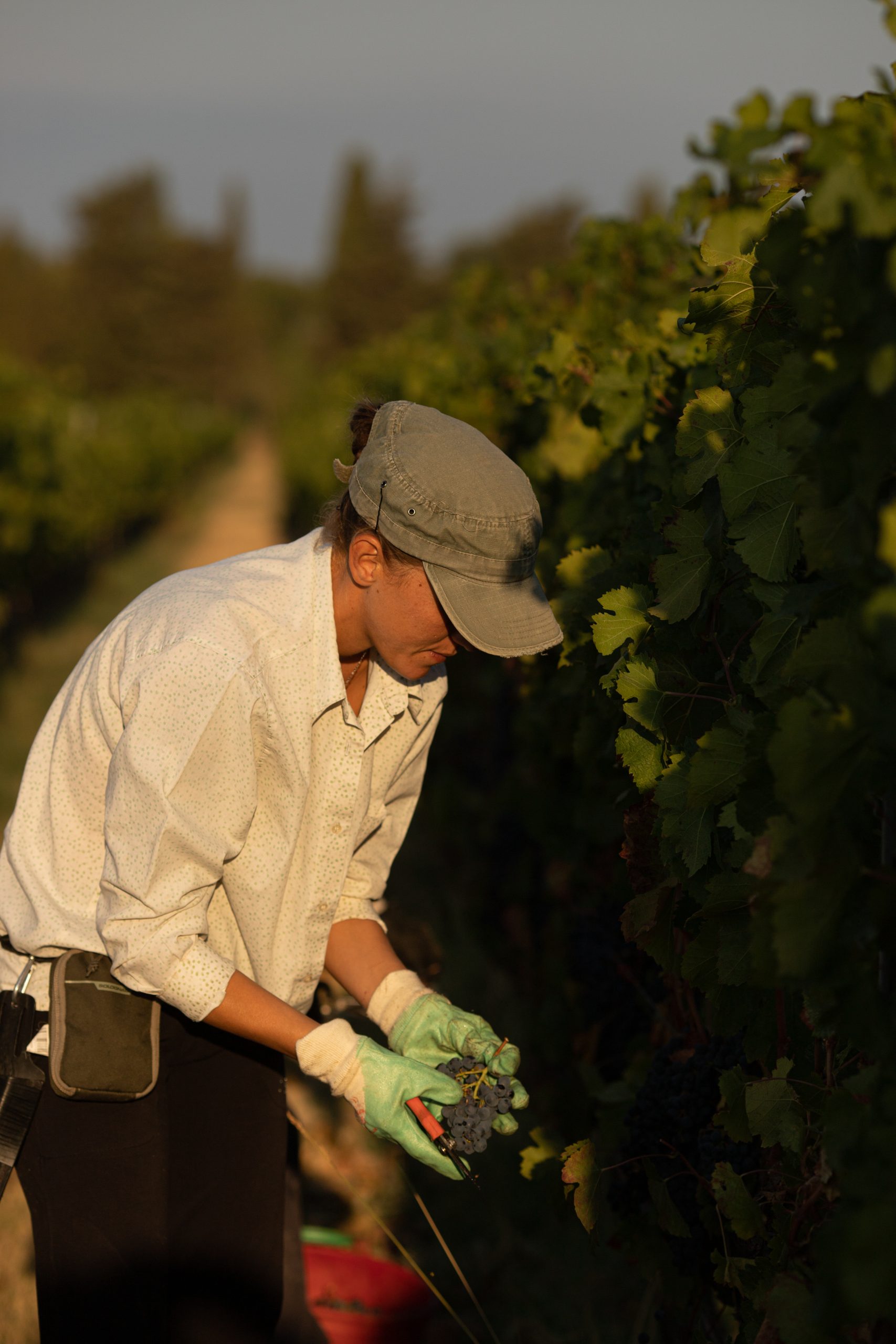
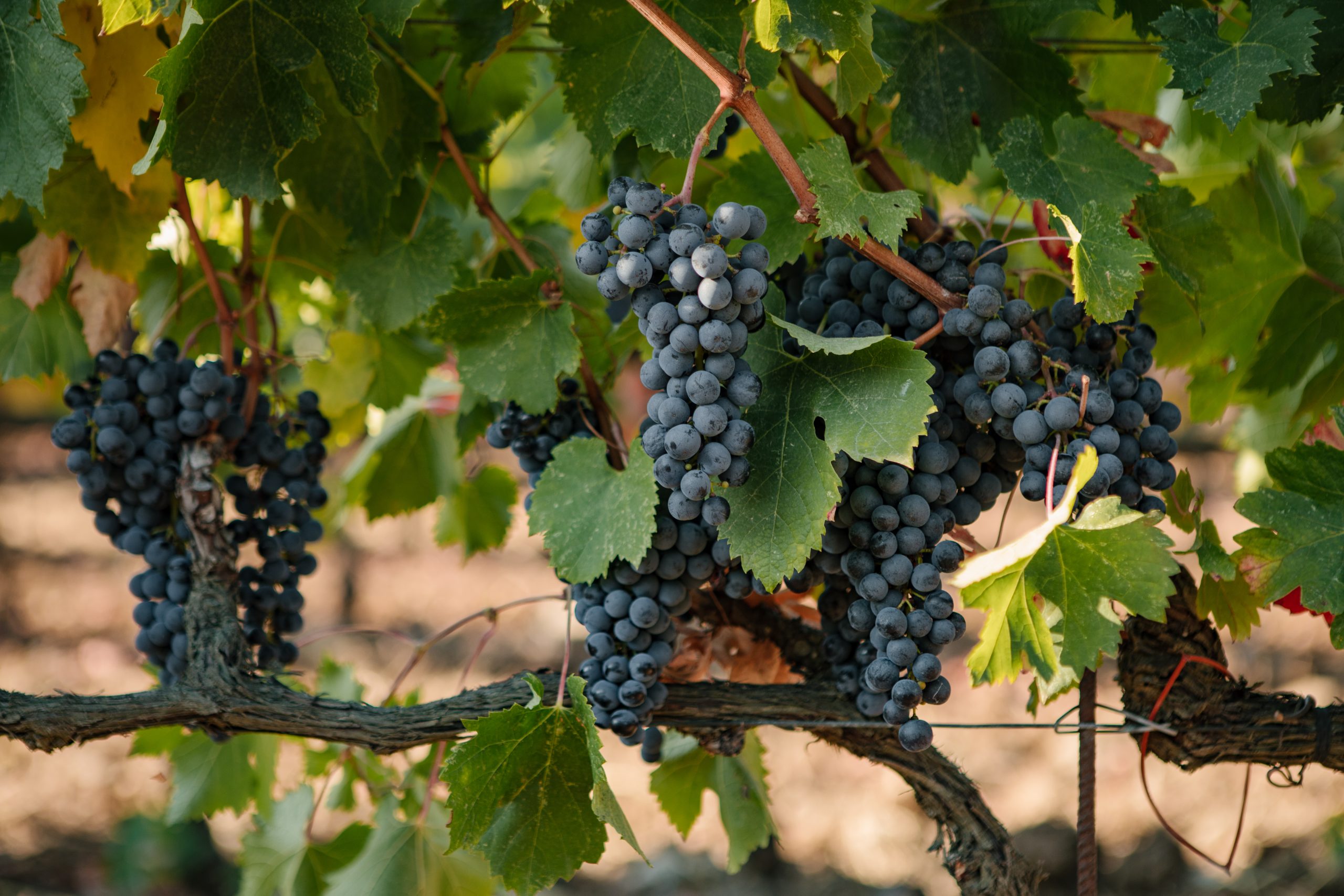
Left: Harvest begins
Right: Merlot grapes
The harvest of white grapes began on August 20th, first with Viognier and ended on September 10th with Fiano. For the red grapes, the first Merlot vineyard was harvested on September 6th, and on September 20th we started with Cabernet Franc. We waited until the beginning of October for the phenolic maturation to complete for Cabernet Sauvignon, and concluded the harvest within 10 days. It was a calm harvest, managed with good timing and without the usual concern of excess sugar accumulation or storms. The grapes had optimal ripeness levels and the quality of the fruit was excellent.
Graph. Monthly average temperature
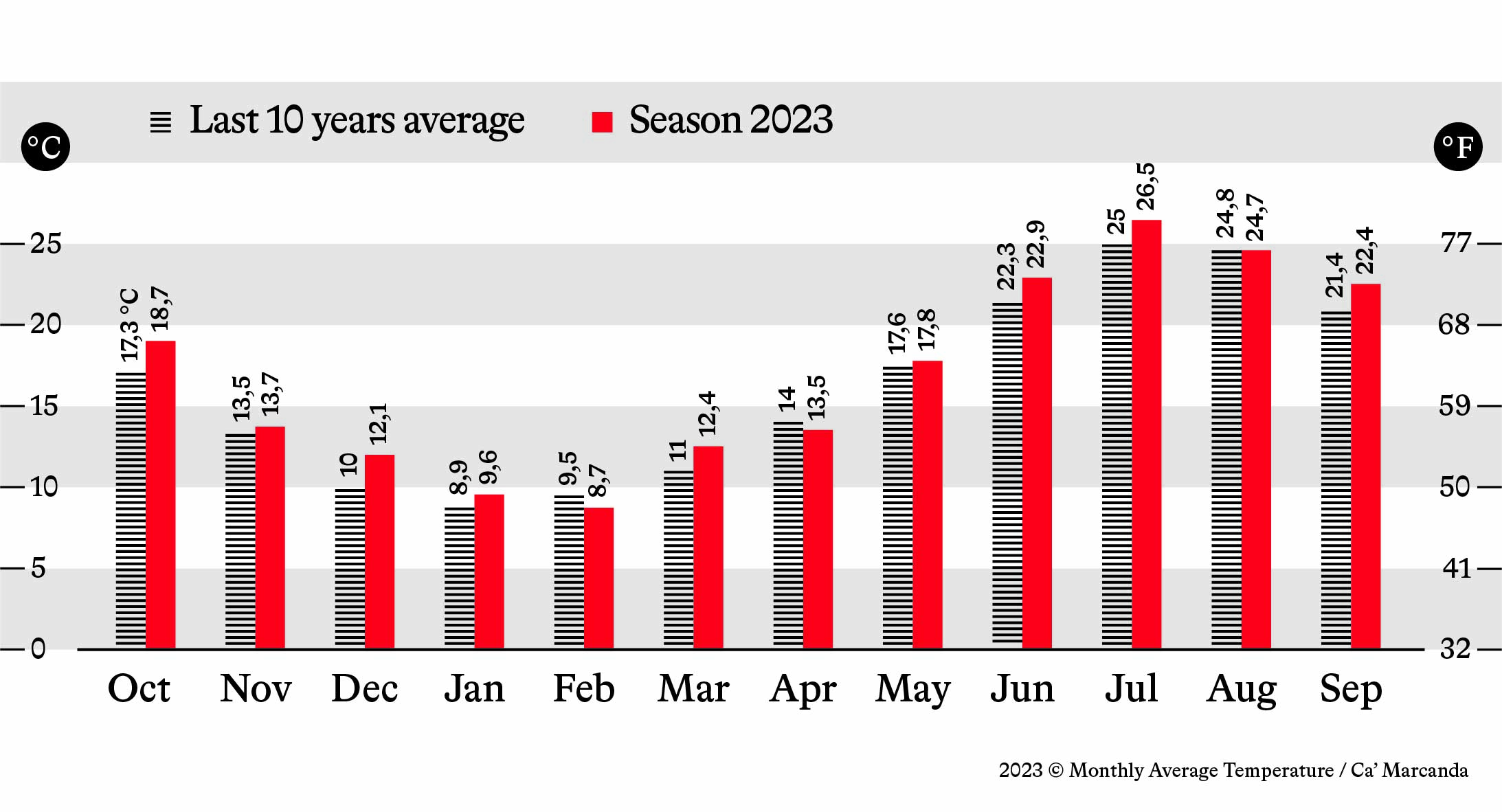
Warm winter, cool spring and mild summer characterize the 2023 vintage. With the exception of December and July, temperatures are quite close to the averages of recent decades.
Graph. Rain chart
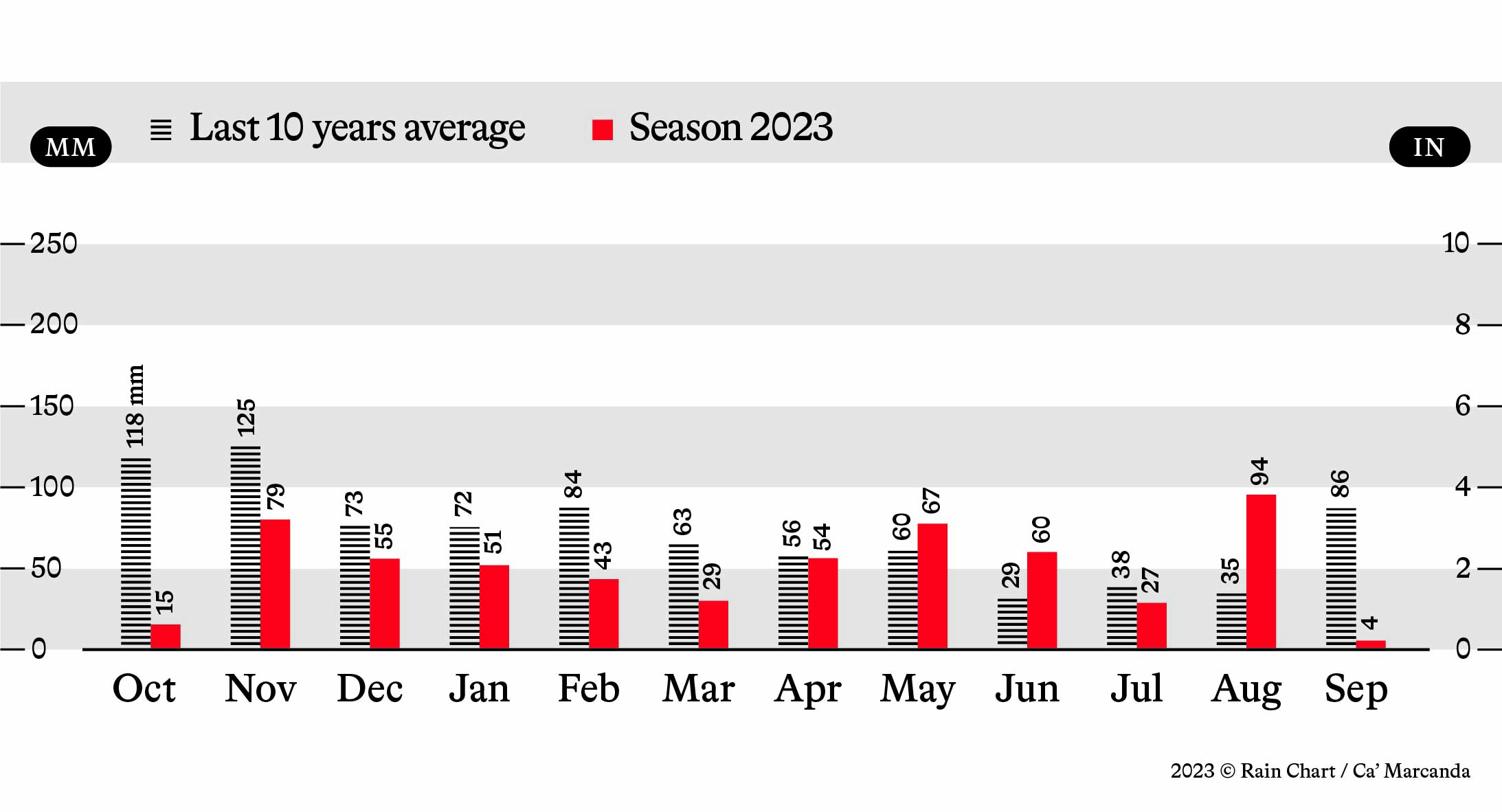
Throughout the winter, precipitation was lower than the annual average. Precipitation instead reached its peak in late spring and August.
Graph. Accumulated rainfall
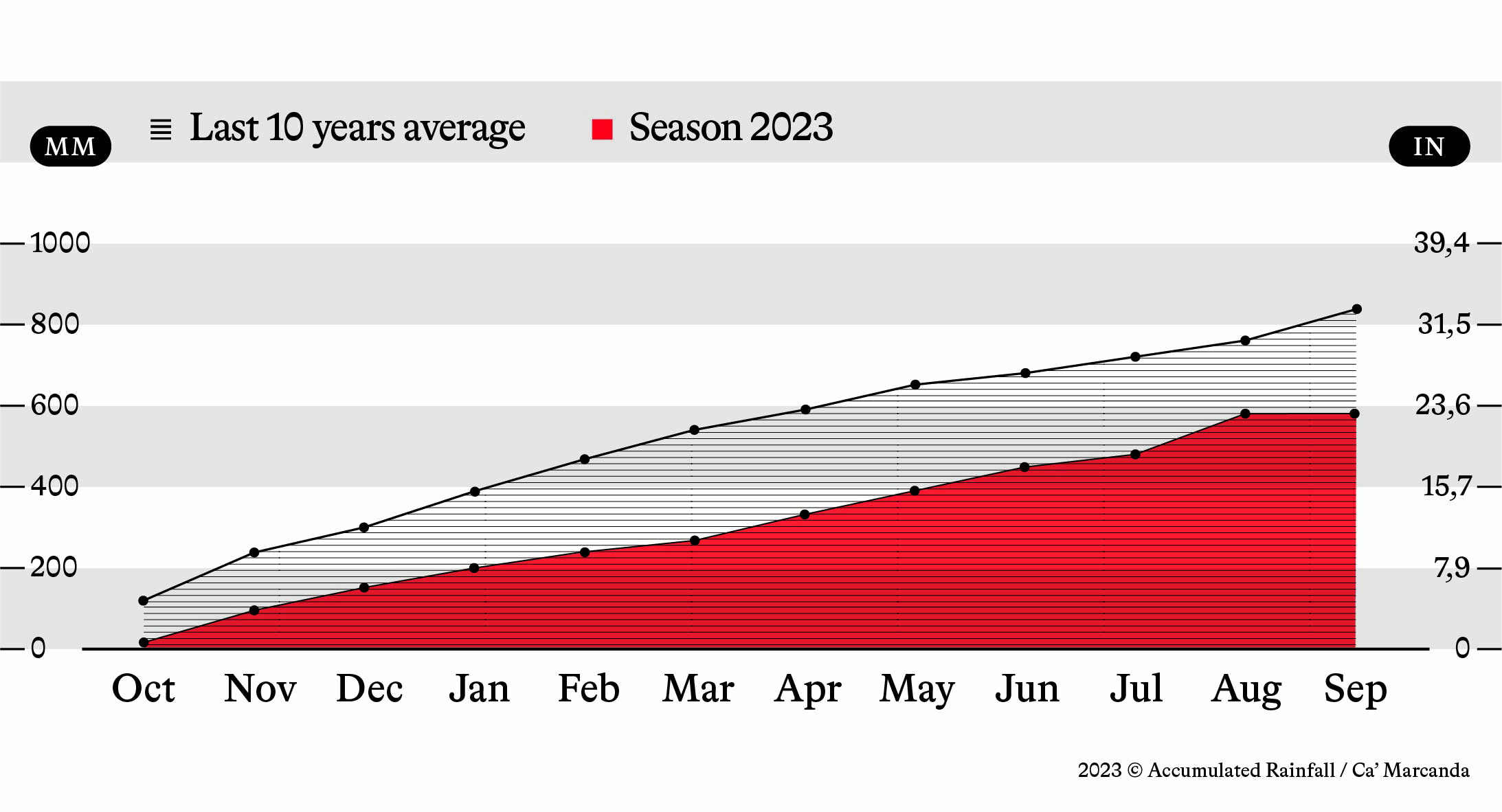
A dry year, with a growing water deficit compared to the annual average of the first half of the season.
Official Source: Gaja winery 2023