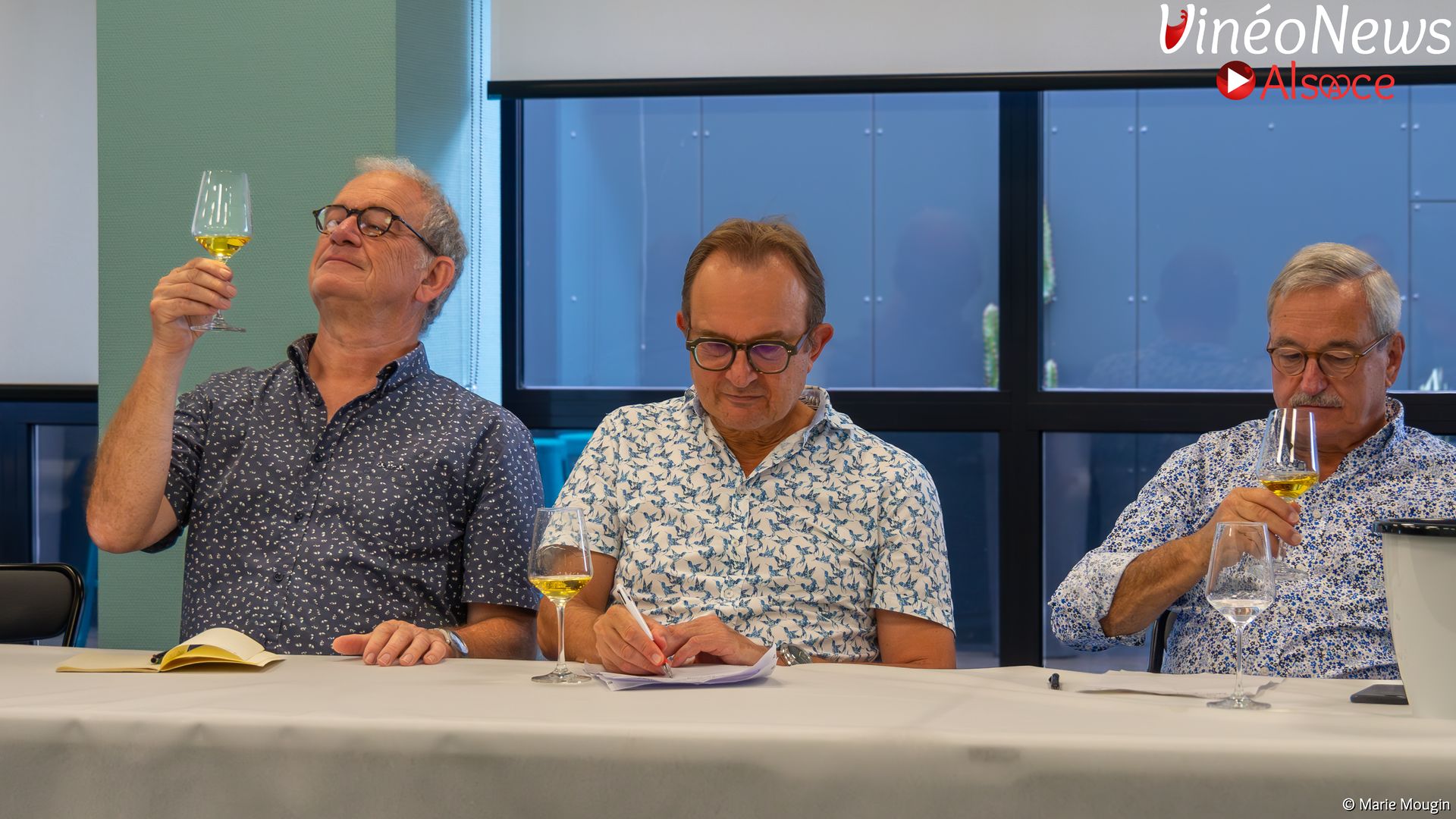
To open this 75th edition of the wine fair, the Saint-Etienne brotherhood organized an AfterWine through time and grape varieties. After a presentation of the confrérie, Jean-Marc Betzinger introduced the day's tasters to the keys and stages of tasting, so as to get the blind tasting off to a good start.
The first wine presented itself with a beautiful, brilliant deep yellow color. After the eye, we turn to the nose. The first nose is rather floral, with notes of hawthorn and acacia, in complete contrast to the second nose which is more mentholated, with fruits such as apricot and mirabelle plum. The third stage is the palate. The wine is very long on the palate, with a very square structure, a peppery side and a tannic side. This tannic side was an opportunity for Jean-Marc to give a first clue to the wine's period, by explaining how a mechanical press worked, which today has been replaced by pneumatic presses.
This first wine is a 1985 Muscat from Bott Frères in Ribeauvillé. Despite a severe frost (-23°C) at the beginning of the year, and a third of the vineyard hit by hail, the 1985 vintage remains a fine one, thanks to a fine summer and a fine autumn.
For the second wine, discovery of a frank yellow color tending towards gold, followed by a highly evolved nose. Depending on your sense of smell, you'll find aromas of macvin and ripe fruit, as well as hints of mold and a hint of iodine. On the palate, frank acidity dominates, a drying acidity that comes frommalic acid. The finish is more bitter (little lemon), with a spicy, mineral edge. The grape variety was quickly discovered: a Riesling from the Wilm winery (taken over by Wolberger) in Barr, vintage 1998. Jean-Paul took the opportunity to point out that it was a very early year, with a cold spring, a fine summer and a much uglier September.

From the very first glass, this third wine stands out with its clean, bright, greenish yellow color. The nose is very greedy, with candied fruits (mirabelle plum, white peach), indicating a warm vintage. On the palate, the backbone of this wine isacidity, with lemony and peppery notes (the evening's experts will tell you Timut pepper). The wine is well-balanced, with a certain purity and salinity on the finish. This wine, much appreciated by the evening's tasters, comes from a vintage based on concentration, a 1990 Riesling from the Laugel house in Marlenheim.
The fourth wine reveals a deep yellow color that, unlike the previous wines, is "colder", with little color, reminiscent of a wine that has been centrifuged. The wine's complexity is immediately apparent on the nose. The first nose is very delicate, with notes of dried fruit (apricots). Then the wine falls back, quickly fades, then rises again with notes of cinnamon, spices and a hint of wood. The palate is more disconcerting, rather hard, angular and tannic, with a dominant alcoholiness. Unlike the previous wines, this one is a little curiosity, difficult to taste on its own. It would express itself fully with cooked cheeses such as an old Comté or Gouda. This bottle is a 1979 Tokay from Kuentz-Bas.
This penultimate wine also has green highlights. The first nose is of dried flowers such as roses, while the second is more woody, with aromas of vanilla, cinnamon and fig. On the palate, spice dominates, with a slight acidity. The wine is very saline, with a tannic finish (a new clue to the production period). Guests discover a gourmet 1981 Gewurztraminer from Heitzmann in Ammerschwihr.
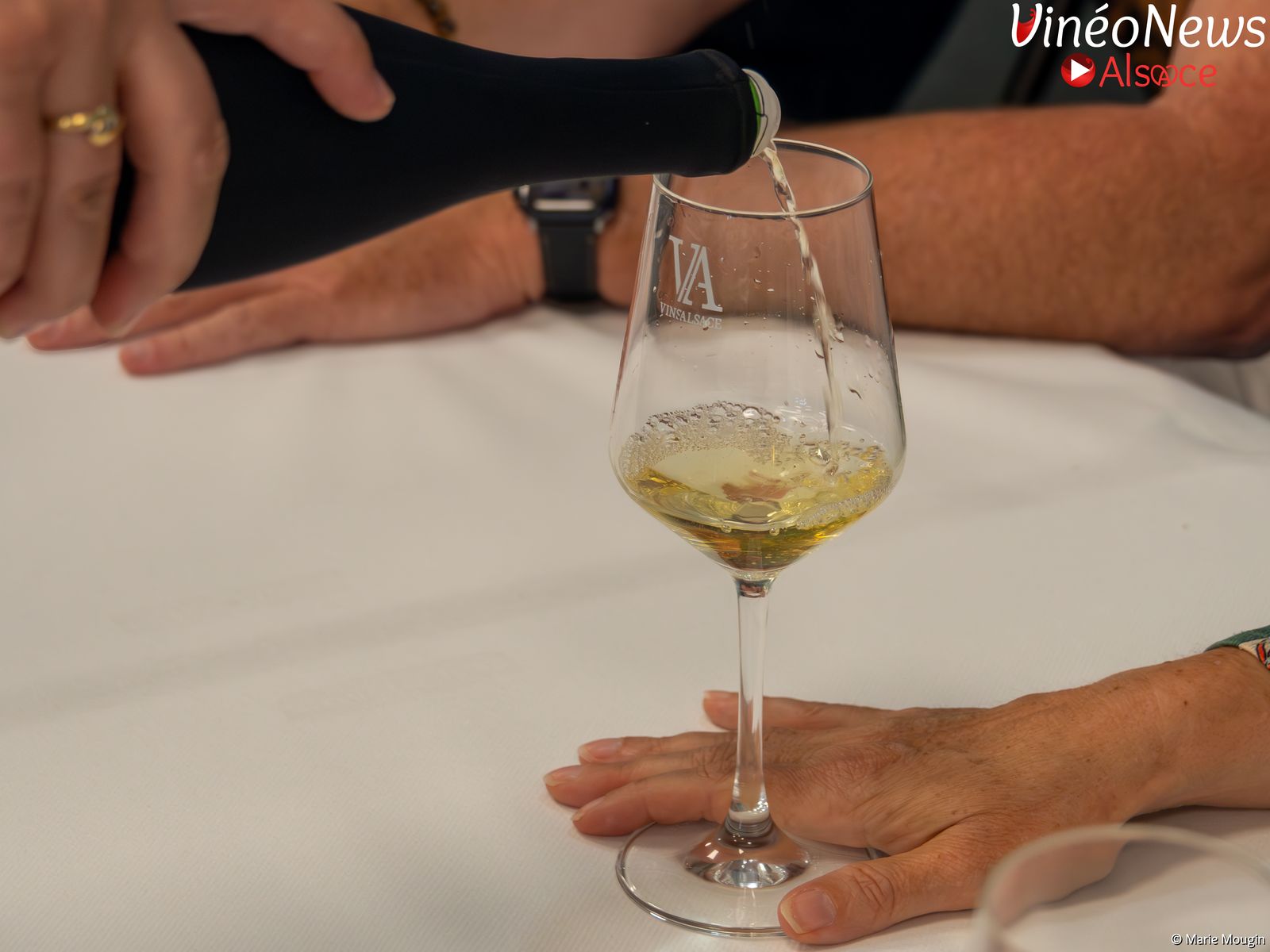
The tasting concludes with a sixth wine, featuring an intense golden color and, for the first time in this tasting, a liquorish texture. The nose of this wine is in total harmony with its color. The very complex nose presents aromas of quince, mirabelle plum and honey, but also a spicy, exotic edge. Once on the palate, the wine fills the mouth, this volume being linked to the wine's fatness and sugar. Although the palate is less complex than the nose, this wine has a fine balance of sugar and acidity (tartaric acidity). With its notes of honey and ripe, stewed fruit, tasters are drawn to a Gewurztraminer. This was a 2009 vintage from François Braun in Oschwihr.
The tasting was a wonderful stroll from the north to the south of the Alsace vineyards, through different vintages that show the ageing potential of Alsace wines, but also their diversity. The tasting was an emotional sharing of the wines selected.
Source: VINEONEWS ALSACE
Photo Credit: Confrerie St. Etienne