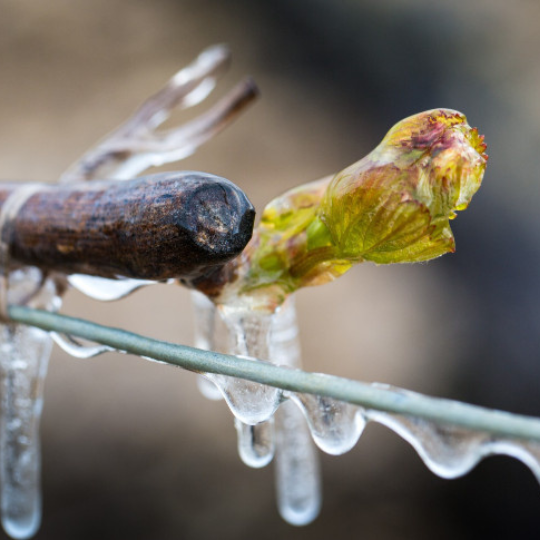

The Chablis vineyard has regained its colours since the sleepless nights at -5°C at the end of March. "The heterogeneity of the stages in the plots affected by the frost is fading," observes Manon Pinot. "A few weeks ago, we could clearly see the buds burned by the cold, but that's it, the secondary buds are gone, the vines have come back to life." The wine advisor of the Yonne Chamber of Agriculture is now waiting for the end of flowering to see to what extent the flowers will bear fruit. "It is still too early to properly estimate the losses, but I know that the damage is limited in the Chablis plots protected by candles, sprinklers, or wind turbines, and that the breakage is more or less important depending on the location of the vines on the slopes or at the bottom of the valley in the rest of the appellation as well as in the vineyards of Auxerrois and Vezelay."
Last week, the thermometer fortunately did not drop as low as in Champagne. "To my knowledge, there have been no new frosts," says Manon Pinot. Growth has slowed down but should quickly restart with the return of the heat announced on Friday, May 22. "Chardonnays are currently reaching the 'separated flower buds' stage," says the advisor. The vines have lost the 15-day lead they had at bud break but are 1 day ahead of 2025 and 5 days ahead of the average of the last 25 years on the eve of flowering. »
A single spot of mildew
Winegrowers are in the process of raising the vines to treat in the best conditions but are currently enjoying a comfortable phytosanitary situation. "Last week we saw only one new spot of mildew on one of the plots of our network affected by the rains of May 1st. And during our tour yesterday zero," reports Manon Pinot. The next tasks are expected by the end of the week. "We call for vigilance and compliance with the treatment schedule, but we are off to a much better start than in 2024 when mildew had already caused great damage before flowering," compares the advisor. Powdery mildew has also been very discreet so far. "The weather will become more favourable for him but for the moment it's very calm. The same goes for grape worms," says Manon Pinot, whose attention was more closely attracted by unusual observations of erinosis on the upper surfaces of leaves and inflorescences. "It's impressive but there's nothing to do for the moment. It will be necessary to wait until the "bud in the cotton" stage next year to apply sulphur. On May 19, the advisor was also informed of the dates of the first mandatory treatment against flavescence dorée. "From May 27 to June 4," she announces.
Source: Vitisphere