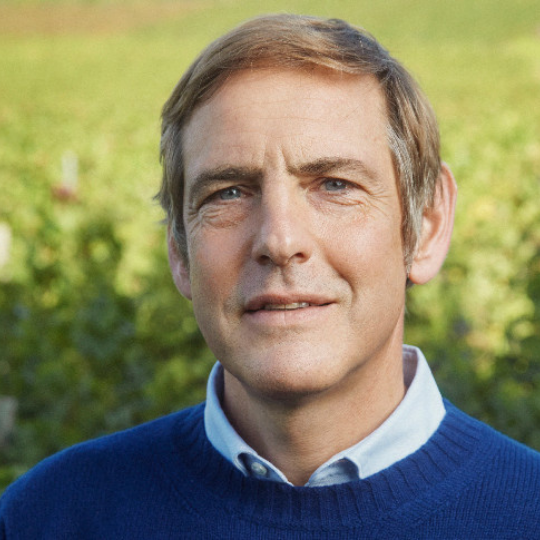
With the wine crisis violently shaking the historical foundations of the wine industry, Martin Cubertafond, strategy consultant and lecturer at Sciences-Po, calls in this interview for a return to updated fundamentals on the operational approach to the markets. By targeting new purchasing opportunities, by opening up other places of consumption with other formats and reduced prices, by developing more diverse styles of wine, by writing different narratives... A call for modernization as much as democratization, otherwise "we will have a micro-niche of ultra-knowledgeable consumers, but a micro-niche in the end" warns the analyst, who calls for "a marketing that is oriented towards invitations and not education".
Is wine still in line with current consumption patterns?
Martin Cubertafond: It is important to take stock of the context of the decline in global wine consumption since 2017. Before, consumption was more or less stable, because there were countries where consumption was falling, such as France and other countries that have historically produced it, and then countries where consumption was increasing, such as the United States and China. But now, consumption is decreasing even in these new countries. Since 2017, global consumption has been declining by 3% per year. We consume 20% fewer bottles in 2024 compared to 2017. It's huge, the market has shrunk by a fifth in 7 years.
And there is a distance that is being established between the wine and the new generations. The transmission engine no longer works as before. Wine is less and less present in the daily lives of young people under 40. The industry realizes that consumers no longer come to wine as they used to. It is therefore up to the wine to go to the consumer. This implies a profound change of mindset. Now, it's not all doom and gloom. There are quite a few successful experiments in recent years. Wines that succeed in this complex environment.
If there has been an awareness, it seems that currently the sector no longer knows which wine to turn to: the quest for easy-to-drink gurgling, the development of alcohol-free, the variation of AOC in new colours and sweetnesses, still pyramidal structures to better value, but also new formats in cans or tapers... Is wine innovating or is it being lost?
It's very good that it's going in all directions, because we no longer have a choice. We have to innovate. Not everything will be successful, but we have to adapt. And there will be winners, those who will find a way to reach out to the consumer: in what place? For what occasion? With which product? With what story to tell? What format? How much does it cost? This implies a strategic reinvention. The central question is: how do I get my product into the hands of the consumer?
Our potential market is shrinking year after year
Let's take the opportunities first. Wine is now being locked up in the meal at the table, which has been becoming scarce for 50 years. It is even worse for prestige wines, which have locked themselves into celebrations and exceptional events. We can't stay only in this niche, because our potential market is shrinking year after year. We also need to make products that are adapted to current consumer occasions. Such as snacking, take-away meals, deliveries, concerts, festivals, barbecues, new terraces...
You have to go to new places. That is to say, we must go beyond the historical places of consumption. To go where consumers are today. This sometimes involves changing the distribution method. Until now, distribution was just about execution: we released a product and put it in supermarkets and supermarkets or cafés, hotels and restaurants (CHR), now we have to be more precise and innovative in our distribution strategy to reach new places.
Our container has not followed the lifestyles
What adaptation of the product are you talking about, the content and/or the container?
Let's start with the format. The 75-centilitre bottle was very suitable for the lifestyle of the late 20th century, for a household with parents and children around two meals at the table a day. But today, wine consumption is no longer a daily occurrence. It has become occasional. And in France, 71% of households have 2 or fewer people (compared to 56% in 1999) for whom with the 75 cl bottle there will be a feeling either of drinking too much or of wasting it. In addition, 53% of meals in France last less than 30 minutes, compared to 38% in 1999. Dinners alone at home are 43% in France, compared to 29% in 2005. So the way of life of the French has changed profoundly in 30 years. But our proposal remains the same: the 75-centilitre bottle of wine that requires a corkscrew. Our container is not suitable at all. It has not kept up with consumers' lifestyles. We have to reconnect.
I don't have the key, neither in the format nor in the container. I'm not telling you that you should only make 25 cl cans. No, but you have to look for it. There are many advantages to having a smaller format: it allows you to meet expectations of moderation, purchasing power (the product will be cheaper), more mobile use, easier keeping cool, access to other places and other consumption occasions... The can is developing in the United States, but not in France, where it suffers from a bad image. What is developing very strongly on the American market is the Tetra Pack of 20 or 50 cl: it's like a milk carton, with a resealable screw cap that allows it to be consumed in several times... That's what Beatbox does, which is a brand of flavored alcoholic drinks based on wine, but it's never specified: they don't sell you wine, they don't sell you a drink, they sell you a way of life.
And as far as content is concerned, how can the profile of wine evolve?
Wine has a problem with the predictability of taste. When you buy a bottle, you don't really know what you'll have in the glass. The beer is much better: you understand very well what you're going to have through the packaging, through the name and through the description. The wine must be much more readable and predictable. Moreover, saying that a wine is complex is a positive adjective for a professional, but this is unfortunately not the case for the consumer who wants a wine explained in two words.
When it comes to wine styles, you have to use growing categories as a gateway. For example, sparkling wines that are great for recruiting new consumers and bringing them into our universe. You have to focus on innovation in all forms, in styles, but also in aromas, alcohol content, calories, sugar... We have to look for what new consumers want.
You mentioned the price issues, but it seems difficult to lower them when they are not remunerative for the sector...
In 2025, the selling price of wine has decreased for the first time in more than 10 years. Before, volumes were decreasing, but average prices were increasing, which was called premiumization. Consumers have a problem with purchasing power and no longer accept premiumization without justification. For years, it was enough to increase the price of wine for the consumer to think that it was better. Now, you need a real justification for a high price, with a packaging, a story, a juice...
Becoming competitive with beer again
And you have to compare yourself to other drinks in unit cost. Wine is too expensive with its 75cl bottle Selling in smaller formats will mechanically reduce the price for the end consumer, and become competitive again with beer and other competitors.
To reach consumers under 40, we also need to question our narrative. Too often, we lock ourselves into overly vertical narratives: the industry wants to educate, to explain that it is a clay-limestone terroir with old Grenache vines... It's complicated and there are a lot of consumers who say they don't drink wine because they don't know anything about it. They don't dare! But on the contrary, those who know nothing about it, we must welcome them. You don't have to have your WSET 3 to be able to drink wine, otherwise it's a disaster! We're going to have a micro-niche of ultra-connoisseur consumers, but a micro-niche in the end. We need to broaden with a much more horizontal discourse. We would have a lot to gain from marketing that is oriented towards invitations and not towards education as we do today.
How can this invitation be used as a lever to rejuvenate the population of wine consumers? If you want to talk to young people under 40, you have to be like them. Society is now much more mixed than it was 20 years ago. It is therefore necessary to project a much more diverse image than wine does today. This is an observation that the industry has also made in the United States: we have a problem, we are overconsumed among whites, we are underconsumed among African-Americans, Latinos and Asians, so we need to have people in the sector who are in the image of our target. If you want to sell to the under-40s, you have to recruit and promote women, people from diverse backgrounds... Look at the official communication and advertisements of the beer and spirits players: they are ten years ahead of us on this point
Tradition is not a sustainable economic model
If the time has come for innovation for operators, how can we be in strategic adaptation and not in dispersion?
Adaptation becomes vital for wine, there is no longer any choice, otherwise we die. Global consumption has decreased by 20% in 7 years. And in France, the National Committee of AOC and IGP Wine Interprofessions (CNIV) estimates that it will fall by 33% in 20 years. We have to adapt. In terms of strategy, it implies a reinvention. Tradition, we are sure now, is not a sustainable economic model. There are some who believed in it for 20 years. But today it is a certainty: the consumer will not come to us, it is up to us to go to him.
When I talk about strategic reinvention, we shouldn't just look at wines. We are in the beverage market, which is not declining, but which is changing in nature. Let's draw a parallel with the music market. In the 1990s and 2000s, with the arrival of the Internet, music became dematerialized and all recorded music gradually disappeared. But the music market, if you look at its size, is bigger than it used to be, it's streaming and concerts that have replaced recorded music.
You have to take a step back to imagine yourself as a player in the beverage industry and ask yourself what's happening today when the boundaries are blurring between the categories of drinks with no-low wines, kombuchas, kefirs... For wines, you have to go beyond the categories of grape varieties, go beyond the price categories, go beyond the uses, go beyond the distribution channels... To reach these consumers, we must first of all enter into their way of life, through accessibility and authenticity, (more than through the history of the vineyard and the culture of wine). We need to become socially relevant again, by being present in the new rituals of consumption, with an emotional connection that attracts attention, that generates trust...
So it is still possible that wine will regain a role in society, but by matching consumer expectations?
Still, I'm optimistic that when the wine really goes to them, consumers will love it again. Because wine is completely in line with many of the expectations and positive values of the new generations: local, artisanal, agricultural... The problem is that we remain stuck in our own codes. Talking about old Merlot vines on clay-limestone soils to young people makes them run away. Let's stop trying to educate young people about wines with our reading grid, let's invite them to come and taste and see that it's good, that it's simple. But for that, we have to accept to reinvent ourselves and solve our problems of format, price, suitability for consumption occasions, narrative...
Source: Vitisphere
Alexander Abellan