
What are the ageing processes for rosés with longer ageing potential? Since 2024, the teams at the Centre du Rosé in Vidauban (Var) have been working on this issue. "In the current context, it is possible that rosé stocks will remain in the cellar for longer," explains Grégori Lanza, the agricultural engineer in charge of the project. We have therefore studied the behaviour of rosé as it ages, while exploring ways to diversify the offer. »
The first results concern rosés made in the 2024 vintage. A control wine, bottled in January 2025, was compared to two other methods bottled five months later. The first has benefited from ageing on lees in stainless steel vats. The second was raised in Wine Globe, a glass container in which the lees were regularly resuspended by stirring. "We organised three tasting sessions, on 3 April and 30 October 2025, and then on 5 May 2026," says Grégori Lanza. At each session, a jury of about twenty professionals evaluated the wines using 19 sensory descriptors, in order to follow the evolution of their characteristics over time. As a result, the three modalities present a very similar sensory evolution. "They age in the same way," says Grégori Lanza. After 18 months, the differences are almost imperceptible, both on the nose and in the mouth. »
Effect of lees
However, the control wine seems to evolve slightly faster. Its sensory profile is closer to that observed in 12-month-old wines than in 6-month-old wines. Ageing on lees therefore seems to bring a small "youthful" bonus to rosés over time. "This gain is about six months," says Grégori Lanza. Beyond that, the gap between the three modalities is blurring. »
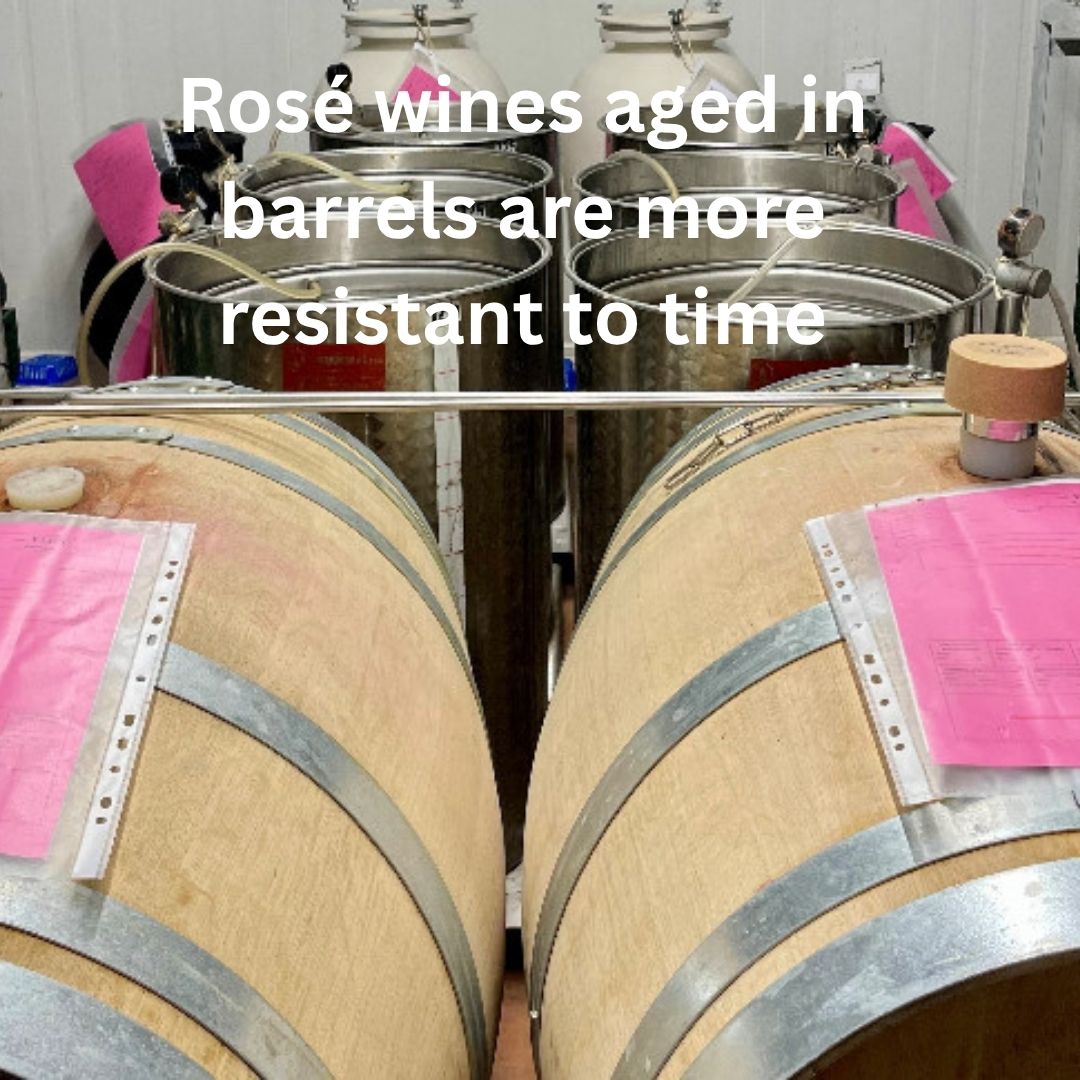
The other part of the programme consisted of comparing, according to the same experimental protocol, three ageing methods: a control kept in stainless steel vats, a rosé aged in jars, and a rosé aged in barrels. The results highlight a very different behavior from the high barrel modality. From the first tastings, it is distinguished by marked woody and spicy notes, as well as by a greater perception of sweetness and astringency. Above all, his sensory profile remains remarkably stable during the 18 months of follow-up. Conversely, the witness and the jar evolve more over time. The jar differs, however, by a greater freshness and notes of ripe fruit that are less pronounced than those observed on the control and barrel, at least up to 12 months of ageing. Beyond this, the profiles of the jar and the witness tend to be similar.
Consumer Feedback
Faced with this atypical profile, the Centre du Rosé wanted to measure consumers' interest in styles of rosé that go beyond the usual standards. To this end, a survey was conducted at the Just' Rosé trade fair, among 123 consumers. They tasted four styles of wines: thiole, amylic, muscat and woody. They were asked two questions: their level of appreciation of wine, rated on a scale of 1 to 5, and the occasions or moments of consumption they associated with each profile.
The objective was to better understand consumer expectations and identify profiles likely to open up new prospects for diversification for the rosé wine category. Unsurprisingly, the thiole profile tops the list of preferences with an average score of 3.59 out of 5, ahead of the muscat profile (3.35), amyl (3.24) and oak (3.21). Although the latter obtains the lowest score, the differences between the different styles of wine remain limited.
Above all, the woody profile is distinguished by the consumption occasions associated with it. Unlike other rosés, it is the only one to be used at times other than the summer period, during a meal, in coulpe, in the evening, in autumn...
Caution
However, these results should be interpreted with caution. The wine presented corresponded to a rosé aged 100% in barrels, a deliberately marked choice in order to accentuate the characteristics of the woody profile. More moderate breeding could result in a more nuanced profile that is potentially better accepted by consumers. This program will continue to refine these initial results.
Source: Vitisphere Chantal Sarra