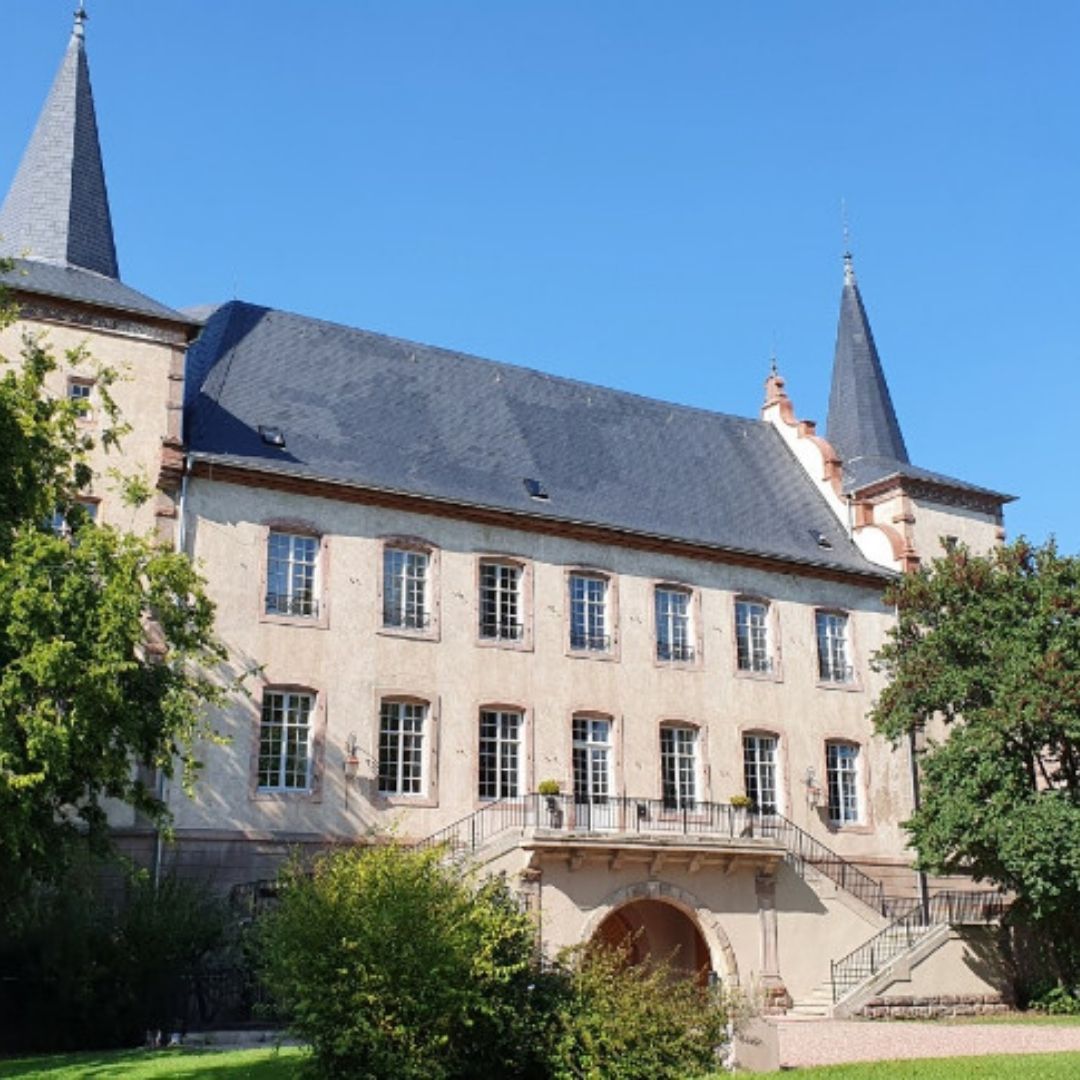
The project for the city of Alsace wines falls from charybdis to scylla. After the announcement by the municipality of Kaysersberg-Vignoble elected in March that it would not sell the communal land necessary for its realization, the castle of Kientzheim, a centerpiece of the project, is now threatened with liquidation, which could make the project fall into oblivion.
Renting is the economic model that has allowed the Château de Kientzheim to be the showcase of the Saint-Etienne Brotherhood and Alsace wines since 1973. - photo credit: Confrérie Saint-Etienne
Without a château, the Cité des Vins project falls through," said Serge Fleischer, president of the Cité des Vins d'Alsace Cooperative Society of Collective Interest (SCIC), which is leading a project that, according to the announced schedule, should lead to an inauguration in June 2029. Because since April 18, the Grand Conseil association that operates the castle of the Saint-Etienne brotherhood in Kientzheim, near Colmar, has been placed in receivership. Its economic model based on the rental of its 16th century Renaissance castle, which it has owned since 1973, for private or professional events, is running out of steam.
"Until 2020, the castle hosted some 80 weddings per year, currently still about twenty. Gala meals are no longer the source of results they used to be. Existing buildings require several tens of thousands of euros of maintenance per year. Today, the wage bill is no longer in relation to the turnover achieved," explains Jacques Cattin, Grand Master 2026 of the most famous wine brotherhood in Alsace.
A proposal that goes in the right direction
The court has set the new examination of the case for mid-October. The SCIC Cité des vins d'Alsace did not wait until this autumn to come to the bedside of the Grand Conseil association, its castle and its wooded park of nearly one hectare. It proposes to take over its liabilities of nearly one million euros, its activities and its three employees. In return, the association would bring the ownership of the castle to the SCIC. "There is no choice. We need to find a solution. This one is going in the right direction," says Jacques Cattin. On 26 June, a majority of the participants in the association's general assembly voted in favour of the SCIC's proposal. It also set a date for a future modification of the statutes in order, in the Grand Master's idea, to create a board of directors and allow for joint management of the place between the brotherhood and the SCIC.
The castle first, then the land
The SCIC's solicitude towards the brotherhood can be explained in particular by the place that the castle and its surroundings must occupy in the possible future city of wines. The building would be part of a scenographic tour allowing a family audience to discover the vine and the culture of wine and take a look at a prestigious wine cellar of 65,000 bottles, the oldest of which dates back to the 1834 vintage. In parallel with this rescue, the SCIC is still working to try to find common ground with the municipality of Kaysersberg-Vignoble about the land on the site that belongs to it. A thorn in his side that will be more difficult for him to extract...
Source; Vitisphere
By Christophe Reibel