Weather 2023!
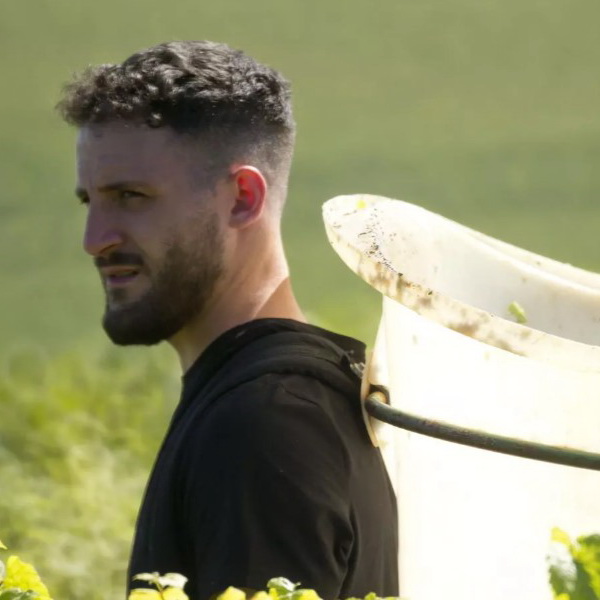
A rare enough fact worth noting: the 2023 vintage, generous in quantity and balanced in quality, follows an equally magnificent and tasty 2022 vintage. Winter was once again mild, with little rain. At the end of winter, in February and March, conditions were cooler and more regular. As spring awakens, April was temperate, with no morning frosts or excessively low temperatures. May was cool and rainy, which helped to replenish the water table. This weather continued until mid-June, with warmer days and cool nights. These conditions were excellent for good vine and flower development.
At the beginning of July, we had a small heat wave with the development of numerous thunderstorms throughout the month, fortunately without any consequences for the vines other than regular rainfall, which kept the soil cool and irrigated the vines. The heat returned at the beginning of August, with wide temperature variations between night and day, which was very favorable to the development of the vines. The stormy weather returned in mid-August in a much hotter environment, alternating with regular rainfall.
«The uniqueness of Mâcon-Verzé »
Since 2004, Domaine Leflaive has patiently invested in the vineyards of the Mâconnais region, and cultivates today through successive acquisitions 37 hectares. The main part of this is in the Mâcon-Verzé appellation. Spotlight on Pierre Vincent, General Manager.
Is there a specific identity to the Mâcon-Verzé appellation?
Compared to the historic heart of Domaine Leflaive in Puligny-Montrachet, we are of course further south. Beyond a Mâconnais identity, it is a question of showing the uniqueness of certain terroirs. In fact, we are trying to become specialists in the Mâcon-Verzé appellation, which accounts for 30 of the 37 hectares we cultivate. We are present on both slopes of Verzé, a valley oriented north-west-south-east. This will enable us to duplicate the Puligny-Montrachet method, identifying the terroirs in fine detail, whereas the Mâconnais has remained generic with names of communes. We are already developing parcel selections to produce cuvées en lieux-dits. That's what we're aiming for: a strong identity based on excellent terroirs that deserve to be showcased.
Which parcels have you isolated so far?
For the moment, we can claim two lieux-dits: Les Chênes, facing due west, and Le Monté, facing due north, which illustrates the consequences of global warming: this late-ripening terroir has become conducive to the expression of a real personality. More to come, but we will claim them when we judge their potential to be truly interesting. In any case, the care we give to the Mâcon-Verzé vineyard is identical to that of Puligny, with organic certification and biodynamic practices. In particular, we use sheep to maintain the vineyard, which avoids tractor traffic while at the same time fertilizing the soil: the circle is complete.
What can you tell us about the 2020 vintage, which went on sale this autumn?
It's a vintage of freshness and purity, even though it was historically early, with harvesting starting in Verzé on August 25th. I like it a lot because it has good concentration yet remains well-balanced. We recommend a long ageing period for our wines, with the principle of two winters in the cellar. The result is a wine that's excellent as an apéritif or perfect with Mâconnais goat's cheese!
In Nantoux, a high quality terroir
The rolling landscapes of the Hautes Côtes de Beaune region can be seen to the west, a hundred meters higher up. In Nantoux, Domaine Leflaive is transforming meadows into a small vineyard, in keeping with the long-term approach that characterizes its practices. A 3.3-hectare parcel was planted in 2021 after three years of preparation: a sowing of legumes and cereals nourished and enriched it naturally so that the roots could dig deeply into the terroir. The first harvest could have taken place this autumn, at the end of the third leaf. We chose to focus on the vitality and vigor of the vines," stresses Pierre Vincent, the Domaine's General Manager. Last summer, we cut all the grapes so that the vines could devote their energy to growing wood, as they say, to strengthening their root system." Truffle trees were added this year on a steep part of the plot. Patience, the first truffles won't come for another twenty years! But the initiative has immediate.
Out of the cellar!
The 2016 vintage Brice de La Morandière's favorite
"For reasons that are often mysterious, wines taste great at some times, close at others. In my recent tasting of the 2016s, in several appellations, I found that these wines had really interesting depth. It's a rather special vintage, with severe spring frosts, a yield half that of a normal year, but a quality harvest. The grapes showed excellent concentration. The 2016s are beginning to show slightly tertiary aromas, with a hint of honey. Seven years of aging isn't much, but it's already seven years! I like the serenity and depth they offer. Les Pucelles and Les Folatières, for example, are Premiers Crus with great ageing potential. In any case, 2016 is already a great vintage for pleasure".