In 2021, the Hospices de Beaune support FÉDÉRATION NATIONALE SOLIDARITÉ FEMMES, represented by Jeanne Balibar, French actress and film director and INSTITUT CURIE, represented by Pio Marmaï, French actor
6 CENTURIES HISTORY
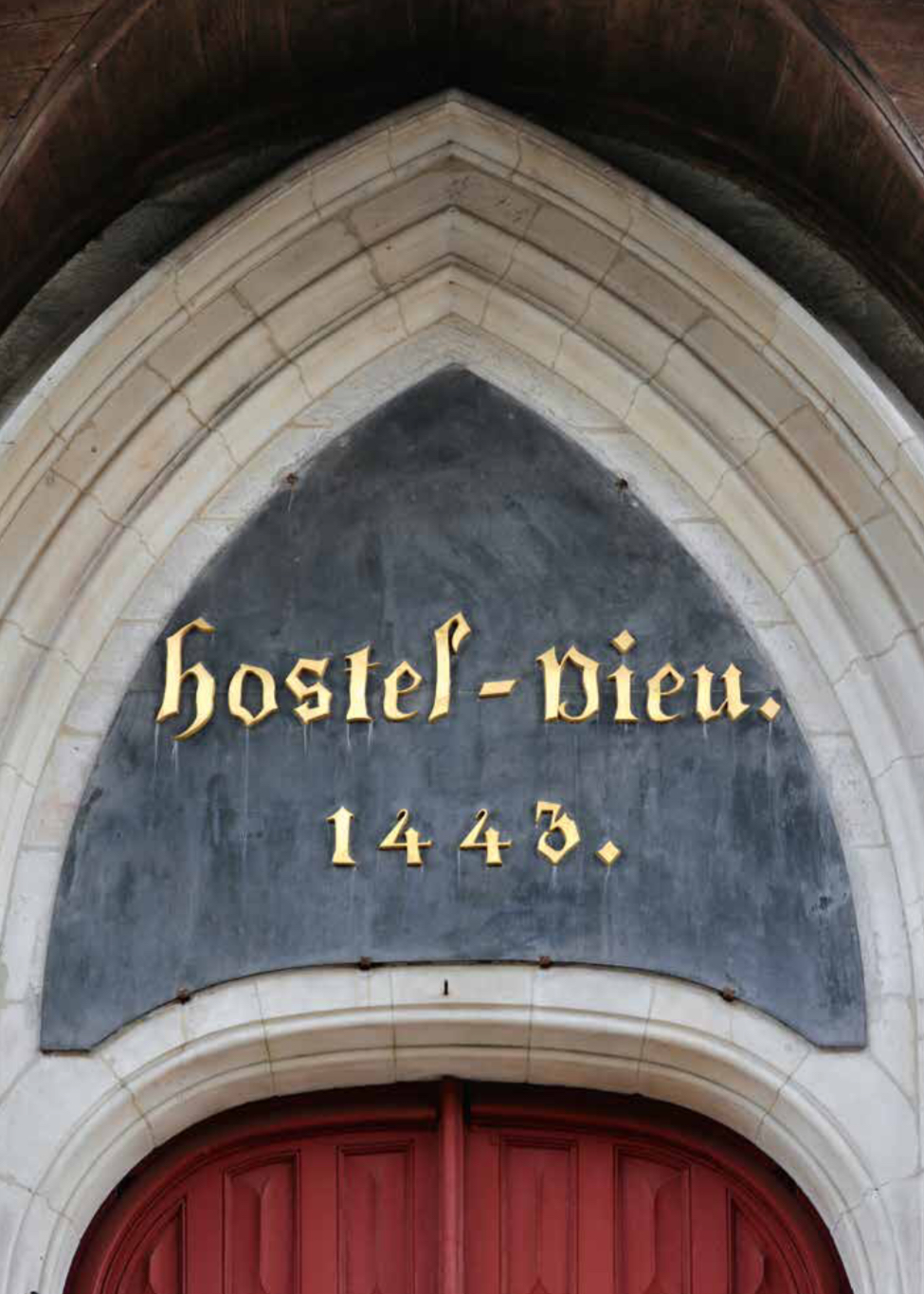
The history of the Hospices Civils de Beaune began in 1443 with the wish of Nicolas Rolin and Guigone de Salins to build a hospital: the Hôtel-Dieu.The founders’ charitable endeavour and act of patronage instituted a tradition that has allowed the Hospices de Beaune to flourish throughout history under exceptional conditions.Today, the Hospices Civils de Beaune includes the hospital centres of Beaune, Arnay-le-Duc, Seurre and Nuits-St-Georges. The Philippe Le Bon Hospital in Beaune is the support establishment of the Groupement Hospitalier de Territoire du Sud Côte-d’Or.
The uniqueness of this hospital institution lies in the importance and the nature of its patrimony, which consists on the one hand of a historical monument, the 15th-century Hôtel-Dieu, which no longer accommodates patients or elderly residents since the beginning of the 1980s; and on the other hand of a prestigious vineyard in Beaune of 60 hectares of the best Burgundy appellations.All of these vineyards come from bequests and donations, and their production is sold each year at auction on the third Sunday of November, as part of the most famous charity sale in the world. Thus, through its heritage, this hospital institution plays a leading role in the two major activities of Beaune and its region: tourism and wine.
The auction, which can include several lots, is the most famous and oldest charity wine auction in the world (established in 1859). In keeping with its founding values, each year the Hospices de Beaune supports a charity by donating the profits from the sale of a pièce of wine, known as the “President’s Pièce”. The proceeds from the sale of the wines are used to maintain the hospital’s heritage and to modernise its equipment and buildings.
In January 2021, a new cardiovascular re-education service
Cardiology care is developing for the benefit of the population of the South Côte-d’Or region
The cardiovascular rehabilitation service opened in January 2021 at the Philippe Le Bon hospital in Beaune. The multidisciplinary cardiology team welcomes day patients with various cardiovascular diseases: myocardial infarction, coronary angioplasty, bypass surgery, heart failure and after any cardiac surgery.This specialized care is based on three axes: physical re-training, optimization of drug treatments and therapeutic education in order to enable patients to adapt their lives to their pathology and to become the actors responsible for optimizing their health. Cardiovascular rehabilitation has proven its effectiveness in reducing cardiovascular morbidity and mortality, improving patient’s capacity for effort and quality of life, and optimizing their social and professional reintegration.
THE HOSPICES DE BEAUNE DOMAINE
Reflecting a multitude of terroirs and burgundian generosity
Ever since the XVth century, men and women have been leaving their possessions and wealth to the Hospices de Beaune. In Burgundy, nothing being more precious than vines, it is from vineyard-donations that the Domaine of the Hospices de Beaune has grown – reflecting the multitude of great Burgundian terroirs and the generosity of its people. Out of respect for the donors, the Domain is managed with the most exacting drive for quality.This commitment is expressed by rigorous cultivation methods in the vineyards, always seeking to remain faithful to the great diversity of Burgundian soils. The auction, every third Sunday of November, enables local Burgundian buyers, and those who come from all corners of the globe, to express their generosity, by taking part in the sale.
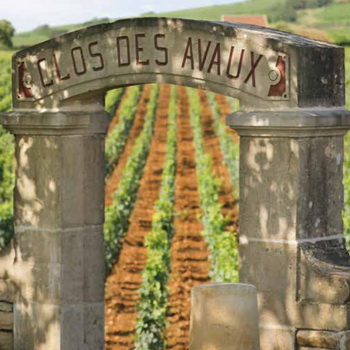
85% of the Domaine consists of First Growths and Great Growths, which is an exceptionally high percentage. The vineyards are mainly located around Beaune (Auxey-Duresses, Beaune, Meursault, Monthelie, Pommard, Pernand-Vergelesses, Chassagne-Montrachet, Savigny-les-Beaune, Volnay, Saint Romain and now Santenay) due to the geographical position of the Hospital. They have such prestigious names as Beaune Clos des Avaux Premier Cru, Corton Grand Cru, Bâtard-Montrachet Grand Cru...
The Hospices de Beaune own vines on the Cote de Nuits as well with the Grands Crus Mazis-Chambertin and Clos de la Roche,and also and in the Maconnais with parcels of Pouilly-Fuissé.
The average age of the vines is around 35 years. The production area being run by the Hospices is close to 60 hectares, of which 50 are used for Pinot Noir, the rest for Chardonnay. The cuvées are sometimes from single vineyards, and sometimes the result of harmonious assembling of grapes from different plots. This is a singularity of the Domaine, which contributes to the uniqueness of the range of wines being offered by the Hospices de Beaune.
The work in the vineyard is carried out by 23 individuals, known as vignerons,who are employed by the Hospices and working under the direction of Ludivine Griveau, Régisseur du domaine, winemaker and manager since January 2015. Each vigneron is responsible for approximately 2,5 hectares of land. They respect their environment and limit the production of their vines in order best to express the typicity of the individual plots (the terroir).
The relationship between health and the environment is at the heart of our operations : the estate is already engaged in a bio-dynamic approach and manages to overcome dificulties without the use of synthetic chemicals.
For over 25 years, carefully thought-through farming is practised: no herbicides are used, ploughing is done in summer and winter and all treatments are chosen with regard to them not endangering the natural biological equilibrium. Since 2008, almost all the grapes have been produced without the use of synthetic products, and according to the methods of biological viticulture.
Harvesting is done by hand, the grapes being transported in small cases to the newvathouse,where, since 1994, the winemaking takes place.
For more than 10 years, important maintenance work has been done in the winery: modernized sorting tables, temperature control system for the fermentation tanks and since 2013, all the grapes are brought to the wineries via gravity, allowing the grapes to be directed with less handling , which improves its organoleptic characteristics and its cellaring potential.
And more recently, many innovations were introduced at the Hospices de Beaune winery.
The first major innovation concerns the installation of supervision software. This software was customised for the Hospices de Beaune winery in close collaboration with its manager. This software provides a visual overview of the premises and tanks, so the overall condition of the vat room can be seen at a glance.
This software allows for tank management, notably the programming, control and monitoring of temperature, both on site and remotely.
“These first years of implementation made it possible to fine-tune our needs and upgrade features to meet the requirements of the Hospices de Beaune,” Ludivine said.
The innovations also include the purchase of several temperature-controlled vats that are in line with the plot-based work implemented since Ludivine Griveau’s arrival at the Hospices de Beaune in January 2015, for her first vintage.
Finally, the team performed a test on the use of two destemmers as a pilot winery in order to assist wine-producing companies in the introduction of their equipment.
This research and testing work has enabled the Hospices de Beaune winery to gain new momentum by combining traditional winemaking methods with modern technological solutions.
OPENING SPEECH
161ST HOSPICES DE BEAUNE CHARITY WINE SALE
Mr Poher - Director and Chairman of the Board of Hospices Civils de Beaune
The 161st Hospices de Beaune wine sale pays tribute to the women who have made or are making our institution: Guigone de Salins, our founder, the hospital sisters, Marie-Cécile, a caregiver who was a victim of Covid last year, and the 1,277 women who work today in our four hospitals and eight EHPAD.
We also wish to do justice to all women: those in distress that we receive in the emergency room, victims of violence simply because they are women, those who confide in us to screen and treat breast cancer, those who are preparing for and experiencing childbirth.
To all these women, we owe respect, safety, peaceful sanctuary, and the best part of our humanity.
The proceeds from this and future sales will allow us to complete the €70 million reconstruction of our hospital and, in a few weeks, to acquire a new mammography machine.
We will also take up other challenges:
- The launch of the museographic project for the Hôtel Dieu, delayed by the health crisis, following the magnificent exhibition that opens on December 4.
- The eco-responsible approach that is part of our strategy in the service of health. The estate continues its commitment to bio-dynamics.And,at the hospital,as part of our cancer research,we will now be hunting for endocrine disruptors.
Finally, this vintage is a reflection of what the hospital has experienced in 2021: a hostile environment and, at the end, the pride of having overcome the dificulties.
2021 VINTAGE OF THE HOSPICES DE BEAUNE : « A YEAR OF ICE AND SURPRISES »
Ludivine Griveau - Winemaker of the Domaine des Hospices de Beaune, October 25, 2021
Our final task for this challenging year is to look back over the events of 2021 and take stock of the dificulties we faced, both on the ground and from the skies. The last 12 months have been a struggle to say the least, and we wanted to provide you with a full overview of what happened. It is a year we will remember forever.
The vintage brought us a blend of fraught nerves, six months of hard decisions and a month of September that once again saved the day for our Pinot Noirs and Chardonnays.
After a rather mild winter (temperatures only dropped to freezing for 7 days and dipped to a minimum of just -3.5°C) with rain falling from October to March, the buds had barely even swollen by 23 March. While incoming water was admittedly slightly high, the low rainfall in February and March meant that we had to work the topsoil to protect our water reserves.At this stage already, the indicators modelling bud burst (Chambre d’Agriculture Côte d’Or – CA21) predicted that the vines on the hillsides were ahead of those on the flat ground (based on the temperature required for growth).
Late March/early April brought a period of exceptionally mild weather (27°C on some afternoons). This short period of warm weather triggered rapid vegetation growth and therefore swift bud burst, resulting in Chardonnays with full leaves in the Côte de Beaune. As we had feared, the hillside areas had grown more quickly than usual, and that proved deadly for what happened next.
The events that followed will remained etched in our minds for a long time to come. Frost warnings began coming thick and fast and the nights of 6, 7 and 8 April sealed the deal.The diurnal temperature range was huge, and at night we recorded lows of -8°C, sometimes for more than 9 hours.What could we do to combat such a serious cold snap? Whether the frosts were called “advective” or “radiative”, the end result was the same. We knew we could lose the entire harvest. Because even with all the information at our fingertips about the frozen enemy, our hopes of being able to do something about it began to dwindle. In Meursault, 3 cm of snow fell at 12:30 am on 7 April.And temperatures dropped to -7°C at 2:00 am. Despite the severity of the situation, everyone stepped up and helped each other light frost candles in a show of unprecedented solidarity. Even in the middle of the night, the vines were buzzing with activity; growers doing everything they could to save the buds that had emerged too soon.
The frost passed, leaving growers shaken up and impatient.The weather stayed cool, cold even, up to the week of 27 April, and the vines showed no signs of recovery.A battle of nerves began.Yet there was nothing to do but wait and measure the extent of the damage.And there remained one glimmer of hope: even though the primary buds were damaged, what about the secondary buds? We also fought the temptation to “take action whatever the cost”,we had to stop ourselves from just “doing something, anything.” Because doing nothing really was the best of course of action.
We left the soil, the fertilisation and of course the buds, well alone. Then the next challenge arose. We had to save as many buds as possible for the harvest and the following year’s pruning, but we couldn’t save too many because we didn’t want to disrupt the start of the flowering process.The battle of nerves continued, accentuated by the vast differences in the emerging damage that forced each grower to make decisions based on individual parcels, even individual vines. As expected, the hillside vines were the worst affected, because they were the furthest along in the growing process.
This contrast became even more marked at the beginning of May when – at long last – more vigorous growth began in more favourable weather conditions. Regrowth was slow but sure.The vines appeared to take on a very pale colour, but no foliar fertilizer was applied. It was hard to stop the teams from going back out into the vineyards, but we held strong and stayed the course.
During the gloomy month of May, regrowth was very variable; sometimes only a single leaf would emerge over eight days. The cold (4°C below average for the season) and the lack of light (30% less sunshine) made 2021 one of the latest vintages, with sluggish vegetation and stressed growers. The rains came at the end of May. Even though the welcome moisture did make up for the drier months, downy mildew became a threat. We applied the first plant protection treatment (with no synthetic chemical inputs) on 28 May.
THE 349 BARRELS
The 2021 crop will be offering 349 barrels (called pièces) and 5 half barrels (called feuillettes), 293 barrels and 2 half barrels of red wine and 56 barrels and 3 half barrels of white wine.Those 349 barrels are distributed in 50 cuvées, 33 of red wine and 17 of white wine, carefully crafted by Ludivine Griveau, winemaker of the Domaine des Hospices de Beaune.
The cuvées are either from single vineyards, or are judicious assemblings of grapes from different vineyard plots. This assembling of wines is one of the originalities of the Domaine des Hospices, creating some special wines which are unique to the Domaine.Each cuvée is named after an important donor or benefactor of the Hospices de Beaune
TOTAL WHITE WINES = 56 BARRELS AND 3 HALF BARRELS TOTALWINES = 349 BARRELS AND 5 HALF BARRELS
MARC DE BOURGOGNE Série A = 3 barrels of 228L Série B = 3 barrels of 228L
FINE DE BOURGOGNE Série A = 1 barrel
SOTHEBY’S WINE
The world-leading auction house
Established in 1744, Sotheby’s is the world’s premier destination for art and luxury. Sotheby’s promotes access, connoisseurship and preservation of fine art and rare objects through auctions and buy-now channels including private sales, ecommerce and retail. Our trusted global marketplace is supported by an industry-leading technology platform and a network of specialists spanning 40 countries and 50 categories, which include Contemporary Art, Modern and Impressionist Art, Old Masters, Chinese Works of Art,Jewelry,Watches,Wine and Spirits, and Interiors, among many others.
Sotheby’s Wine’s annual worldwide auction sales of wine and spirits totaled an outstanding $92 million in 2020, with over 15,000 lots sold across 41 sales – a nearly 50% increase in the number of auctions held in 2019. Over $60 million of wine and spirits were sold to online bidders in 2020 versus $28 million in 2019,with 85% of all lots offered finding online buyers. Demonstrating continued strength in Asia, Sotheby’s led the market in the region for the third consecutive year,with over 70% of the total bid amount in all Wine and Spirits sales attributed to collectors in Asia.
Sotheby’s Wine’s has had the privilege of auctioning numerous record-breaking wines and spirits in recent years,with 2020 alone witnessing new world auction records for any bottle of Japanese whisky, any bottle of whisky produced by the Dalmore Distillery, as well as any bottle of Cognac. Sotheby’s Wine currently holds the world records for any whisky collection ever sold at auction, any private wine collection ever sold at auction, the most expensive bottle of wine ever sold at auction and the most expensive bottle of spirits ever sold at auction.
In addition to auction, Sotheby’s Wine launched a retail business in 2010. With a retail store located in Sotheby’s New York headquarters and e-commerce at www.sothebyswine.com, Sotheby’s Wine offers a carefully curated selection of wines from the world’s most prestigious producers and important regions. Expertly assembled by our experienced specialists, the selection is built upon lasting relationships with winemakers from across the globe,with bottles that are ready for immediate consumption, in addition to investment-worthy wines from highly sought-after vintages. A second retail location opened in Sotheby’s Hong Kong galleries in 2014.
THE PRESIDENT BARREL Corton Renardes Grand Cru 2021
The Pièce des Présidents from the 2021 harvest will be a Corton Renardes Grand Cru.
It is in the rare Burgundy Grand Cru vineyards of the Côte de Nuits, an area renowned for the greatest Pinot Noir vintages, that Ludivine Griveau, winemaker of the Domaine des Hospices de Beaune, has scrupulously selected the best vines within the climat Corton Renardes.
For this 2021 edition, the Hospices de Beaune present a unique cuvée fully aged in a barrel specially crafted by master tonnelier François Frères (Saint-Romain, Côte d’Or).
A unique barrel

To mark the 161st Hospices de Beaune auction, La Pièce des Présidents has been produced by the François Frères cooperage in Saint-Romain. It is an exceptional barrel made from Burgundy oak from the Cîteaux national forest near the prestigious abbey of the same name. The barrel is used for all vinification processes, including maceration and alcoholic and malolactic fermentations. Carrying out alcoholic fermentation in a wooden vessel means that the tannins from the wood are integrated into the wine more effectively.
After leaving the staves to dry naturally in the open air for more than three years, those with the finest grain are sorted using a new technology developed at the request of the François Frères cooperage in association with a local company.
THE PRESIDENT BARREL Corton Renardes Grand Cru 2021
The level of toast must meet the expectations of each house and estate, whether they are looking for discreet grilled notes or more specific aromas. Extra Long toasts are the signature of the François Frères cooperage and are available in Light, Medium, Medium Plus and Heavy intensities.
These toasts retain the wine’s fruitiness and minerality on the palate but tend to reduce the toasted aromas. For the 2021 vintage, Ludivine Griveau Gemma opted for a Medium Plus Extra Long (MX+) toast for the Pièce des Présidents.
VISION by François Frères, a unique barrel
The head of the VISION barrel has a transparent surface.This unique feature means that the grapes can be seen fermenting and the wine ageing.The front hatch is used to fill and empty the barrel.

Characteristics:
Capacity: 228 litres
This is the usual volume for a Burgundy barrel (also known as a pièce).
Wood origin: Burgundy oak trees from the Cîteaux national forest, managed by the Ofice national des forêts and Site Natura 2000, a special protection zones for wild birds (ZPS).
Grain selection (tree growth rings): the quality of the grain was chosen using a new and very precise selection technology developed for the François Frères cooperage based on optical growth ring readings.
Traditional Burgundy strapping: eight hoops in chestnut wood and six hoops in prepainted galvanised iron.
Head and front hatch: the head is made up of pieces of oak wood and a 316 stainless steel hatch for filling and emptying the barrels after alcoholic fermentation.
.Food grade polycarbonate glass: the head is also set with a central window in food grade polycarbonate. As well as looking elegant, the transparent surface shows the berries during the fermentation phase and allows winemakers to monitor colour intensity.
.Barrel fermentation: this technique makes it possible to obtain wines that are fuller, rounder, more complex and more aromatically precise, with better integrated oak and a smooth finish.
As well as integrating the wood earlier in the process, barrels allow winemakers to vinify lower volumes of wine; they offer a milder extraction method and the marc can be almost permanent immersed during alcoholic fermentation.The lees and berries are placed in suspension to extract fine tannins.
Given the character of the 2021 vintage, the Domaine des Hospices de Beaune chose the VISION cask with a longer toast and stronger intensity. Combined, these two characteristics will underscore the finesse of the vintage and consolidate the density and softness of the tannins.
Cuvées
Beaune 1er Cru Dames Hospitalières
Pommard 1er Cru Dames de la Charité
Pommard 1er Cru Dames de la Charité
Beaune 1er Cru Guigone de Salins
Clos de la Roche Grand Cru Cyrot Chaudron
Corton Grand Cru Charlotte Dumay
Beaune 1er Cru Les Grèves Pierre Floquet
Pommard 1er Cru Les Epenots Dom Gobelet
Volnay 1er Cru Blondeau
Corton Grand Cru Clos du Roi Baronne du Baÿ
Mazis-Chambertin Grand Cru Madeleine Collignon
Pièce des Présidents Corton Renardes Grand Cru
Savigny-Les-Beaune 1er Cru Arthur Girard
Volnay 1er Cru Les Santenots Jéhan de Massol
Pommard Billardet
Echezeaux Grand Cru Jean-Luc Bissey
Beaune 1er Cru Nicolas Rolin
Corton Grand Cru Docteur Peste
Clos de la Roche Grand Cru Georges Kritter
Beaune 1er Cru Clos des Avaux
Santenay Christine Friedberg
Pommard Raymond Cyrot
Volnay 1er Cru Les Santenots Gauvain
Beaune 1er Cru Rousseau-Deslandes
Monthelie les Duresses Lebelin
Savigny-Les-Beaune 1er Cru Les Vergelesses Forneret
Beaune 1er Cru Maurice Drouhin
Beaune 1er Cru Brunet
Pommard Suzanne Chaudron
Auxey-Duresses 1er Cru Les Duresses Boillot
Beaune 1er Cru Hugues et Louis Bétault
Savigny-Les-Beaune 1er Cru Fouquerand
Pernand-Vergelesses 1er Cru Les Vergelesses Rameau-Lamarosse
Beaune 1er Cru les Montrevenots Cyrot Chaudron
Meursault 1er Cru Les Genevrières Philippe Le Bon
Puligny-Montrachet Bernard Clerc
Corton-Charlemagne Grand Cru François de Salins
Meursault 1er Cru Les Charmes Albert Grivault
Pouilly-Fuissé Françoise Poisard
Bâtard-Montrachet Grand Cru Dames de Flandres
Corton-Vergennes Grand Cru Paul Chanson
Meursault 1er Cru Les Charmes De Bahèzre de Lanlay
Meursault Goureau
Corton Grand Blanc Grand Cru Docteur Peste
Corton-Charlemagne Grand Cru Roi Soleil
Beaune Blanc 1er Cru Suzanne et Raymond
Chablis 1er Cru Côte de Léchet Jean-Marc Brocard
Saint-Romain Joseph Menault Meursault 1er Cru Les Porusots Jéhan Humblot
Meursault 1er Cru Les Genevrières Baudot
Meursault Loppin
Meursault 1er Cru Les Genevrières Philippe Le Bon
Puligny-Montrachet Bernard Clerc
Corton-Charlemagne Grand Cru François de Salins
Meursault 1er Cru Les Charmes Albert Grivault
Pouilly-Fuissé Françoise Poisard
Bâtard-Montrachet Grand Cru Dames de Flandres
Corton-Vergennes Grand Cru Paul Chanson
Meursault 1er Cru Les Charmes De Bahèzre de Lanlay
Meursault Goureau
Corton Grand Blanc Grand Cru Docteur Peste
Corton-Charlemagne Grand Cru Roi Soleil
Beaune Blanc 1er Cru Suzanne et Raymond
Chablis 1er Cru Côte de Léchet Jean-Marc Brocard
Saint-Romain Joseph Menault
Meursault 1er Cru Les Porusots Jéhan Humblot
Meursault 1er Cru Les Genevrières Baudot
Meursault Loppin
TOTALWHITE WINES = 56 BARRELS AND 3 HALF BARRELS TOTALWINES = 349 BARRELS AND 5 HALF BARRELS
MARC DE BOURGOGNE Série A = 3 barrels of 228L Série B = 3 barrels of 228L
FINE DE BOURGOGNE Série A = 1 barrel
CHARITIES TO BENEFIT FROM THE PRESIDENT BARREL
As per tradition, since 1945, every year, in addition to the important funds raised for investment in the medical equipment and modernisation of the hospital buildings managed by the Hospices Civils de Beaune, the proceeds from the sale of one particular barrel the «Pièce des Présidents», are donated to one or more charities.
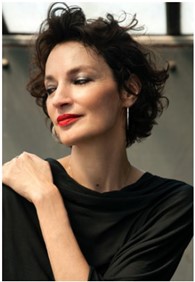
This year, the funds from this special barrel will support two organisations that work tirelessly championing women’s causes : Solidarité Femmes represented byJeanne Balibar, to help in their fight against violence towards women, and Institut Curie represented by Pio Marmaï, to benefit medical research against breast cancer.

SOLIDARITÉ FEMMES
To denounce violence against women and in particular domestic violence, a coordination of associations from the women’s movement was created in the late 1970s, to become the Fédération Nationale Solidarité Femmes ( FNSF). At the end of the 1980s, the FNSF launched a communication campaign with the support of the public authorities, and in 1992 created the national listening number for women victims of domestic violence.
In 2021, the Fédération Nationale Solidarité Femmes is made up of 73 specialised and local associations that follow more than 35,000 women and children in reception and accommodation centres. They lead training, information and prevention actions. Solidarité Femmes 21 is one of them and operates in the Côte-d’Or department.
The national helpline 3919,Violences Femmes Info,welcomes women victims of all forms of violence, mainly domestic violence.In 2020,nearly 100,000 calls were handled by the Solidarité Femmes team. Victims, relatives, professionals and professionals request the 3919 platform, free, anonymous and confidential and open 24/24 and 7/7.
Mission
- Engage alongside women for their rights to liberty,equality,integrityand support them towards freeing themselves from violence and achieving autonomy
- Recognize violence against women as one of the manifestations of persistent inequalities between women and men
- Accompany women in all their procedures (legal, social, administrative) and support the recovery of the women concerned and the child co-victims, with individual interviews and collective meetings
The 3919-Violences Femmes Infos (3919-VFI)
The 3919 - Violences Femmes Infos is, since January 1, 2014, the national reference number for telephone listening and guidance for women victims of all forms of violence: conjugal, sexual, forced marriages, female genital mutilation, violence at work.
Accessible from a landline or mobile in mainland France, as in the overseas departments, this national number guarantees listening,information,and,depending on requests,an adapted orientation towards local support and support systems in charge.
A team of professional listeners ensures sympathetic listening by establishing a climate of trust which allows the person (female victim, third party) to speak about the situation and to clarify the analysis that they make of it.
The objective of this listening is to allow the person to act, thanks to appropriate information on the steps to follow and on the role of the different professionals and services then, as far as possible, to guide the woman victim to a specialized association which can support her and if necessary bring her to safety quickly, as well as her children.
The only specialized network with accommodation facilities and specialized reception centres for women victims of violence and their children:
offering women specialized and professional support through various specific accommodation arrangements or in reception centres other than accommodation
- more than 3,000 emergency accommodation places or more permanent accommodation - day care centres and local hotlines (hospitals, town halls, police stations, etc.)
Other activities
The organisation of Safety Arrangements for Women in Great Danger.
A national surveillance of domestic violence producing studies based on data from 3919 and the activities of Solidarity Women associations
Training and sensitisation of professionals, prevention actions
General public communication campaigns
The right
- training and legal advice at 3919 and within the Solidarité Femmes network - advocacy and advice on bills
The coordination of an action on the (re) housing of women victims of domestic violence: more than 1000 women relocated since 2010
Proposals for measures (health, accommodation / housing, return to work, etc.)
The publication of guides
INSTITUT CURIE
The Institut Curie, France’s leading centre in the fight against cancer, combines an internationally renowned research centre and a state-of-the-art hospital complex which treats all cancers, including the rarest. Founded in 1909 by Marie Curie, the Institut Curie brings together 3,600 researchers, doctors and caregivers across three sites (Paris, Saint-Cloud and Orsay) around its three missions: care, research and teaching. A private foundation recognised as being of public utility authorised to receive donations and bequests, the Institut Curie can, thanks to the support of its donors, accelerate discoveries and thus improve treatment and the quality of life of patients.
Fighting breast cancer: a public health issue
In France each year nearly 58,000 women are affected by breast cancer and we mourn for the 12,000 women who die from it. Cancers are the second leading cause of death in women, with breast cancer recording the highest incidence. Fighting cancer is therefore a public health issue.The Institut Curie mobilises its researchers, doctors and caregivers on a daily basis to heal more and more women. To achieve this objective, these medical and scientific experts must take up a double challenge, understanding the mechanisms of resistance to treatment and that of metastatic spread (tumour that develops far from the breast, on another organ), which accounts for 90% deaths especially among young women with so-called triple negative breast cancer which is very aggressive. Thanks to a technological revolution, the analysis of tumours cell by cell, researchers at the Institut Curie are carrying out an ambitious research project that would make it possible to meet these challenges and save lives, the lives of all these women who are fighting breast cancer.
Funds to benefit a state-of-the-art microscope
Atumour is made up of a multitude of cells that varyin molecular profile and response to treatment. Until recently, scientists could only look at the «average» profile of this tumour, the large tumour cell families. And today the proposed treatments are identified based on these molecular profiles. Tomorrow, thanks to this revolutionary technological advance, the single cell analysis called the Single Cell, researchers will be able to study each cell individually, define the role of each cell in the development of the tumour, the one that will generate resistance to treatments, that which is at the origin of the development of metastases or of a recurrence. In this capacity for precise study lies the hope of being able to heal more and more women.The Institut Curie’s project is therefore to accelerate this promising research to develop precision cell medicine that would make it possible to offer each patient a treatment based on the cell profile of their tumour, anticipate their risks of developing metastasis and highlight new treatments thanks to the identification of new therapeutic targets.
The Institut Curie needs help and resources to carry out this project. With the support of the sale of the Hospices Civils de Beaune, the Institut Curie could acquire a state-of-the-art tumour cell microscope equipped with a sampling mechanism that will allow researchers to characterise the cells, essential equipment for the project.
Budget for the microscope: 480,000 €
The 2020 charity barrel was sold for 660.000€ to which are added two donations for a total of 120.000€.The 780.000€ total proceeds have been donated to French hospital workers victims of Covid-19.
Yesterday November 21st this barrel sold for 800.000 euros!!!
Special Thanks to:
Vins de Bourgogne Press Team
Estelle Bidault, Juliette Mezzavlla
Sotheby's Press Team :
Sophie Dufresne, Claire Jehl
Photo Credit: Michel Joly