Submitted last December, the conclusions of the High-Level Group on European wine policies are based on an alarmist observation of the challenges facing the wine industry: deconsumption of the markets and overproduction of certain vineyards driving down selling prices while production costs are rising between inflation and climatic hazards... Do you share this alert?
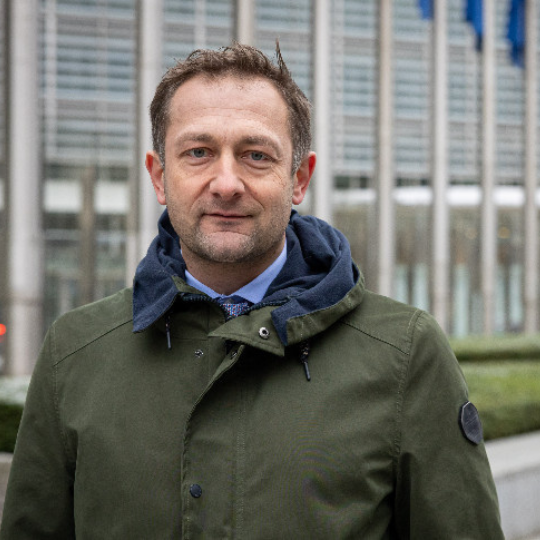
Christophe Hansen: It is true that in addition to an unfavourable economic situation, important structural factors are at play. The reduction in consumption, which has been occurring in France since the 60s, is the most striking. A decline in consumption was also recorded in the main countries consuming and importing European and French wines. Stockpiling, climate and weather events, and geopolitical issues, among others, have justified the many emergency measures adopted over the past decade to support the sector. The sector also accumulates structural problems that have been partially ignored in the past due to the commitment to quality wines and the success of wine exports to the European Union.
I am not alarmed, however, because the European Union's wine sector has already been able to cope with profound changes in the past, supported by an appropriate policy framework to deal with them. Identifying the challenges and their importance was the aim of an assessment carried out by the experts of the Wine Market Observatory that started in 2023, after the implementation of various exceptional crisis distillation measures requested by some producing Member States. It was in the light of the final report of the Market Observatory, and at the request of all the main wine associations in the European Union, that the High Level Group was launched. The recommendations of this group show us the direction to be taken to deal with the current situation.
Regarding the management of wine production potential, can we see in the proposals of the High Level Group the end of a liberalization approach to return to a strategy of supply management in relation to demand?
The current regulatory approach to production potential combines the control of the growth of the vineyard area with the orientation towards the market. In this way, the most successful winegrowers and producing regions were able to expand their production areas in an orderly manner in a system that controls excessive growth.
The approach proposed in the recommendations would not put an end to the current system, but would aim to improve it by allowing Member States to have more flexibility to take decisions on the management of their vineyard areas according to their specific regional situations and in coherence with other relevant wine policy measures. This will require greater responsibility on the part of the sector and public administrations in managing the medium-term production potential.
In addition, some of the proposed recommendations aim to protect from abandonment certain rural areas and cultural landscapes that are strongly linked to wine production.
The High-Level Group has very quickly submitted urgent proposals, when does the European Commission want to put these proposals into practice? Will the temporary and permanent grubbing-up systems be activated from 2025?
At the last meeting of the High Level Group, I explicitly committed to respond quickly to the request of the sector and the Member States on a timetable for the implementation of the recommendations and my services are already working on this. This requires an assessment of the recommendations and how they can be transposed into the legal instruments of the European Union.
More concretely, with regard to grubbing-up, the recommendations do not explicitly include temporary grubbing-up, which was not supported by the High Level Group. However, a more effective alternative system was recommended, which consists of extending the time between grubbing-up and the actual planting of vineyards as part of the support for vineyard restructuring and conversion, as well as other flexibility measures. The Commission has already discussed with Member States in December 2024 a draft regulation to implement this measure and it will be adopted in the coming weeks.
For permanent grubbing-up, it was recommended that State aid rules be used to meet immediate needs. We are also evaluating other possibilities. I would like to stress that there was no consensus within the group on the financing of a grubbing-up measure with European funds. At the level of the European Commission, we are therefore going to carry out an assessment of the options for the reform of the Common Agricultural Policy (CAP) that we plan to present by the end of the year.
The High Level Group underlines the economic and cultural importance of the wine sector, will your mandate protect this sector from anti-phyto pressures on its production and hygienist demands against its consumption?
Wine is an essential part of Europe's heritage, as recognised in the recommendations, and the Commission has been and continues to be committed to supporting it and recognising its uniqueness. Wine production is and will continue to be largely protected in the European Union by specific regulations and a specific budget. But the sector must follow market signals, and respond more closely to the expectations of society, which is increasingly concerned about the environment and public health. The Group does not leave aside public health considerations and emphasizes moderation. EU Member States' policies and recommendations on these issues are diverse. Recommendations on alcohol consumption are a matter for the national level, and I do not intend to go beyond this framework
In this regard, let me point out that the wine sector is one of the most exposed to the consequences of the current environmental and climate crisis. It is therefore essential that the sector strives to find effective solutions to adapt in a sustainable way. The High Level Group recommends various actions to further support the sector in this transition.
Source: Vitisphere