A study from the University of Bordeaux examined 26 red grape varieties for their suitability and adaptability to climate change. The researchers identified five candidates (Fer Servadou, Duras, Manseng noir, Vinhão, and Arinarnoa) that resemble the classic Bordeaux varieties in their sensory profile. All also possess physiological traits to cope with an increasingly warmer and drier climate.
Since the composition of Bordeaux wines is strictly regulated by the protected designation of origin (AOC), these new varieties could initially be used as secondary grape varieties in small proportions in blends. The aim of the study was to assess the impact of these five grape varieties on the typicality of the classic Bordeaux blend made from Cabernet Sauvignon, Merlot, Cabernet Franc, and Petit Verdot. For this purpose, the individual varieties were added in proportions of ten or 30 percent.
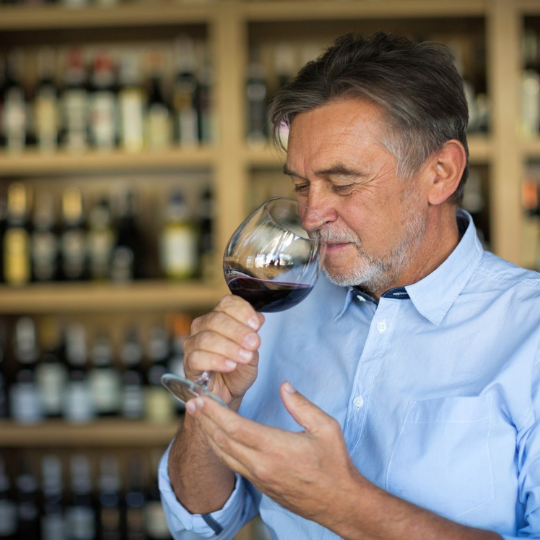
Within two months, two sensory analyses were conducted. In the first test series, 37 professional tasters evaluated the wines. The result: The Bordeaux typicality remained largely intact, even with the addition of ten or 30 percent of the new grape varieties. An exception was the variety Vinhão, whose introduction led to a minimal decline in typicality.
In a second tasting round, a panel of 20 experts examined the wines once blind and a second time with knowledge of the included grape varieties. It was found that the information about the composition had no influence on the assessment of typicality. This suggests that the introduction of new grape varieties had no significant impact on the perception of Bordeaux typicality for experienced experts.
Another result of these sensory tests was that the classic Bordeaux blend was rated as the most typical. The grape varieties Duras and Arinarnoa had no significant impact on the perception of this typicality, even with an addition of 30 percent. In contrast, the addition of Fer Servadou (10% or 30%), Manseng noir (30%), or Vinhão (30%) led to a measurable decrease in typicality. However, these changes occurred within a narrow spectrum of "more" to "less typical." The fundamental characteristic of Bordeaux wines remained intact.
While most research on blends focuses on chemical changes, the question of typicality has hardly been investigated so far. However, this is a central issue, as typicality is closely linked to the recognizability of a wine. It also demonstrably affects consumers' willingness to buy.
The study represents an important step towards the possible introduction of the five examined non-autochthonous grape varieties into the classic Bordeaux blend. Further research is needed, according to the researchers, to assess the typicality of the various blends after barrel and bottle aging as well as across different vintages.
(ru / Oeno One)
Source: Wein.plus