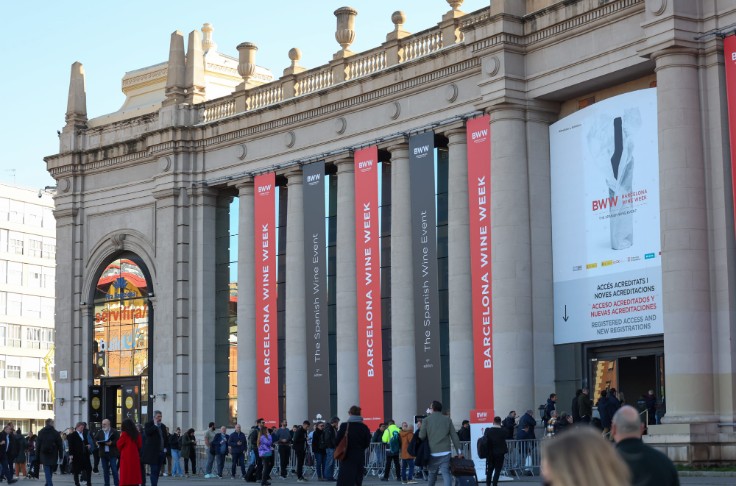
Barcelona Wine Week is back in the Catalan capital from 2 to 4 February. For this new edition, the fair will bring together more than 1,300 companies from all over Spain, an increase of 4% compared to 2025. Hosted at the Fira de Montjuïc, the event has established itself year after year as a major event for Spanish wine professionals. The exhibition area, up 9% compared to last year, should be able to welcome more than 25,000 visitors – there were nearly 25,700 in 2025 – 20% of whom will be international. In this context, two major studies shed light on recent developments, both within the sector itself and in terms of consumer habits and expectations.
Hospitality still a preferred consumer channelThe results of "The Wine Observatory in Spain: Consumption Habits, Perceptions, Trends and the Future of the Sector", which will be unveiled at the fair, confirm several fundamental trends, while shedding light on the future directions of the market. The study highlights the very strong attachment of Spaniards to out-of-home consumption: nine out of ten consumers say they drink wine in bars and restaurants. The survey, based on 1,600 interviews, also shows that wine is above all associated with moments of conviviality, with family or friends, and is mainly part of a gastronomic context. More than half of consumers also drink it at home, largely favouring supermarkets (73% of purchases) and hypermarkets (55%) to make their purchases. The other channels – sales cellars, specialist shops, e-commerce and wine clubs – account for only 23% of the market.
Another lesson is that Spanish consumers attach great importance to quality signs, praising Spanish designations of origin. 76% of them consider that Spanish wine is of good or very good quality. On the other hand, only 28% of them say they have a high level of knowledge about the various ODs and other quality labels. The study also highlights a point of vigilance: 64% of respondents say they are concerned about the readability of the label and the diversity of the offer, two factors that have a direct influence on the act of purchase. Conversely, when information is presented in a clear and intelligible way, consumers say they feel more confident in their choices, thus highlighting the strategic importance of education and the clarity of messages.
The No-Low category prized by young Spaniards
Among the emerging trends highlighted by the study, alcohol-free and low-alcohol wines are, unsurprisingly, in a very good position, especially among young wine consumers aged 18 to 29. Within this age group, 15% say they buy it regularly, while 30.5% have used it in the last twelve months, mainly motivated by well-being and health issues. More generally, this young generation is redefining its relationship with wine, favouring options perceived as fresher, lighter and accessible. Rosé wines, sparkling wines and more informal wine-based drinks are thus becoming increasingly popular. Young consumers are also interested in more innovative packaging formats such as cans and small bottles, which respond to new uses and moments of consumption.
A second study, carried out by the marketing agency Veintemillas, identifies ten key trends to support the sector's adaptation to new challenges. While the report highlights winemaking orientations, such as the reintroduction of native grape varieties or clones that are more resistant to heat and less water-intensive; investments in robotics or mechanical harvesting to deal with the labour shortage; or the use of cutting-edge technologies (sensors, drones, AI and Big Data) to optimize work in the vineyard, he also highlights increasingly marked commercial developments. From the transformation of bodegas into real experiential platforms, aimed at diversifying revenues, to the development of wine clubs and online sales to compensate for export difficulties, Spanish companies are innovating more and more.
At the same time, to deal with the glass crisis, alternative formats are gaining ground: bag-in-boxes, recycled bottles and premium cans are gradually gaining ground, in a context where the decline in production and the rise in the cost of raw materials are accentuating the polarization of the market, to the detriment of the core range. Barcelona Wine Week thus asserts itself as a privileged observatory of the profound transformations of the Spanish wine sector.
Source: Vitisphere By Sharon Nagel