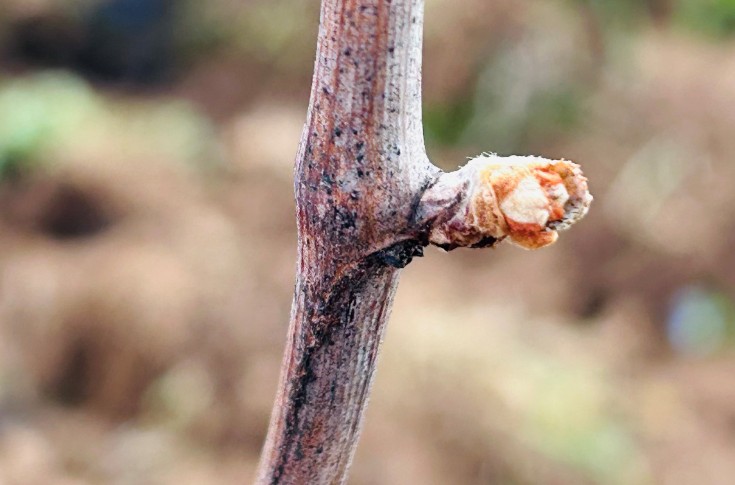
If the catastrophic scenario seems to have been avoided, the true extent of the frost damage on 27 and 28 March will only become clearer with the thaw announced for Easter and the resumption of vegetation for Côte d'Or winegrowers.
Confronted one after the other with advective and radiative frosts on March 27 and 28, the winegrowers of Côté d'Or seem to have escaped the worst. "The damage is out of all proportion to that of 2021. There are some on a few Chardonnay vines and baguettes, more advanced than Pinot Noir, but I am not aware of any plots that are completely frozen. We never exceed 50% of buds affected, and even then, this remains very rare," reassures Thomas Gouroux, viticultural technician for the Chamber of Agriculture. "The situation is not at all comparable with that of Chablis or Champagne. Temperatures have not fallen as low," says Pierre Petitot, partner at Apex Conseil Viticole.
If the first symptoms have appeared locally in the Châtillonnais, in the high hills, where snow fell at altitude on March 26, and in the Nolay vineyards, where 4 mm of rain moistened the buds before the first frost, the two observers are waiting for the thaw announced from this Sunday to refine their diagnosis. "The persistence of the cold for the past 10 days has stopped the growth of the vines, but the average daily temperatures of 15°C and the highs of 23°C will change the situation. We will see an explosion of phenological stages when we return from the Easter weekend, anticipates Thomas Gouroux. From then on, you really shouldn't take any more gel! He warns.
"We will see next week whether the buds that have taken on an unglamorous rusty hue in some poorly ventilated plots start again or not. Today, when they are cut, some are still green on the inside, while others are dry," adds Pierre Petitot, according to whom it is not impossible to discover breakage in the most advanced vines of the Côtes de Beaune and Nuits.
Risk of Spinning
In addition to the losses directly linked to frost, the advisor would not be surprised to see tendril inflorescences at the end of the month. "According to physiologists, 40% of the construction of yield is played out between bud break and spreading of the first leaves," he says. The long cold spell that fell in the middle of this period is likely to cause spinning and to reduce the number of bunches per plant. »