By Alexandre Abellan On 08 August 2023
Producing 44.5 million hl of wine according to initial ministerial forecasts, the French vineyard would exceed the volumes produced to date by its Italian and Spanish neighbours. And this despite yields reduced by mildew in the South-West and drought in the South, not to mention localized hailstorms. The commercial and strategic challenges of the sector remain to be solved in this period of upheaval in consumption.
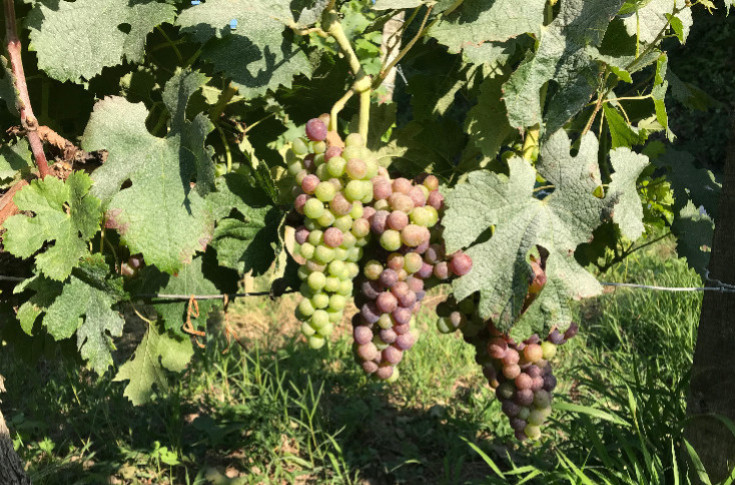
En 2023, the France should produce 44.5 million hectoliters of wines, a decrease of 3% compared to 2022 according to the first note of the 2023 vintage published by the Services de la Statistique et de la Prospective (SSP). Enough to restore to the France the title of first world producer country, lost since 2015 to Italy. According to the most recent figures, the Italian harvest is currently estimated at 43 million hl, with late blight making 2023 "one of the worst years in the history of Italian vineyards for a century, with 1948, 2007 and 2017" according to the agricultural union Coldiretti. In Spain, the harvest of wines and musts could amount to between 36 and 36.5 million hectoliters according to Spanish cooperatives. Based on readings on the first of August, the SSP note puts forward French production between 44 and 47 million hl, knowing that "these estimates are provisional in view of the uncertainty surrounding the consequences of mildew attacks in the vineyards of Bordeaux and the South-West" and that "in Languedoc and Roussillon there is a persistent drought".
In the French vineyard this summer, there is indeed a room and two atmospheres. On one side are the vineyards that have passed between the drops of climate change and on the other those that have suffered the damage. While the first harvests start in Roussillon, this vintage has once again been particularly challenging. Localized hailstorms have punctuated all spring and continue this summer (Anjou, Crozes-Hermitage, Mâconnais, Savoie ...). But the main tipping point of a promising quantity vintage remains the mildew pressure, whose virulence has affected many vineyards (Corsica, Provence, Loire Valley, Rhone Valley...), but especially amputates harvests and morale throughout the South-West quarter (Bergerac, Bordeaux, Gascony ...), where the debate remains lively for the coverage of these excess water by climate insurance (demand maintained despite the refusal of insurers). Areas of Aude and Hérault have also been affected by mildew, but there is more talk in the South of drought, with vines not growing on the Mediterranean coast (Aude and Pyrénées-Orientales). For the vineyards spared, the harvest is promising in Alsace (if powdery mildew remains maintained), Burgundy, Champagne, Cognac, Corsica, Jura, Provence, Savoie (despite mildew and hail), Loire Valley, Vaucluse... At least if there are no bad weather surprises between now and harvest.
Strategic Challenges
With a harvest that "should reach or even exceed the average harvest 2018-2022" at the national level as announced by the SSP, the 2023 harvest promises to be heterogeneous in quantities. A situation as contrasted as the market outlook, while crisis distillation is underway (with a budget below demand) and debates on the strategic management of production potential are driving the wine sector (with yield reductions on the one hand and proposals for interprofessional reserves on the other) in the face of the prospects of further declines in national consumption.-25% by 2034 according to some projections) and current difficulties on export markets (-8% in volume for French wines and spirits in the first half of 2023). Although it is once again the world's leading wine producer, the French vineyard is especially experiencing the challenges of becoming the leading wine marketer.
Source: Vitisphere